
How to Get Tree Sap Off Your Windshield Safely: 7 Proven Methods That Work
Table of Contents
- • Understanding Tree Sap Chemistry: Why Is It So Hard to Remove?
- • Essential Supplies You Need Before Starting
- • Method 1: Isopropyl Rubbing Alcohol (The Gold Standard)
- ↳ Step-by-Step Application:
- • Method 2: Hand Sanitizer (The On-the-Go Emergency Fix)
- ↳ Why Hand Sanitizer Works So Well:
- ↳ Step-by-Step Guide:
- • Method 3: Commercial Bug, Tar & Sap Removers
- ↳ How to Use Commercial Sap Removers:
- • Method 4: The Razor Blade Technique for Hardened Caked-On Sap
- ↳ 5 Critical Rules for Razor Blade Safety on Glass:
- ↳ Step-by-Step Razor Removal Procedure:
- • Method 5: Household Penetrating Oils (WD-40 or Mineral Oil)
- ↳ How Penetrating Oils Work:
- ↳ Application Steps:
- • Method 6: White Vinegar & Warm Water Solution
- ↳ Instructions:
- • Method 7: Clay Bar & Glass Polish Treatment for Micro-Residue
- ↳ How to Clay Bar Your Windshield:
- • Comprehensive Comparison Table of Sap Removal Methods
- • What NOT To Do: 5 Common Mistakes That Ruin Your Windshield
- ↳ 1. Never Turn On Wiper Blades Over Dry Sap
- ↳ 2. Avoid Abrasive Scouring Pads or Steel Wool (Grade 0 or Higher)
- ↳ 3. Don’t Let Solvents Drip and Dry on Car Paint
- ↳ 4. Never Scrape Dry Glass
- ↳ 5. Don’t Work on a Hot Windshield Under Direct Sun
- • How to Clean Tree Sap Off Your Windshield Wiper Blades
- • How to Protect Your Windshield & Prevent Tree Sap Adhesion
- ↳ 1. Apply a Hydrophobic Glass Coating or Rain Repellent
- ↳ 2. Know Your Trees & Park Smart
- ↳ 3. Use a Windshield Cover or Car Cover
- ↳ 4. Wash Your Car Regularly
- • Frequently Asked Questions (FAQs)
- ↳ Q1: Will rubbing alcohol damage my windshield tint?
- ↳ Q2: Is acetone or nail polish remover safe to use on a car windshield?
- ↳ Q3: Can tree sap permanently damage windshield glass?
- ↳ Q4: Does hot water melt tree sap off windshields?
- ↳ Q5: How do I remove tree sap from car paint without ruining the clear coat?
- • Final Thoughts & Key Takeaways
- ↳ Quick Action Summary:
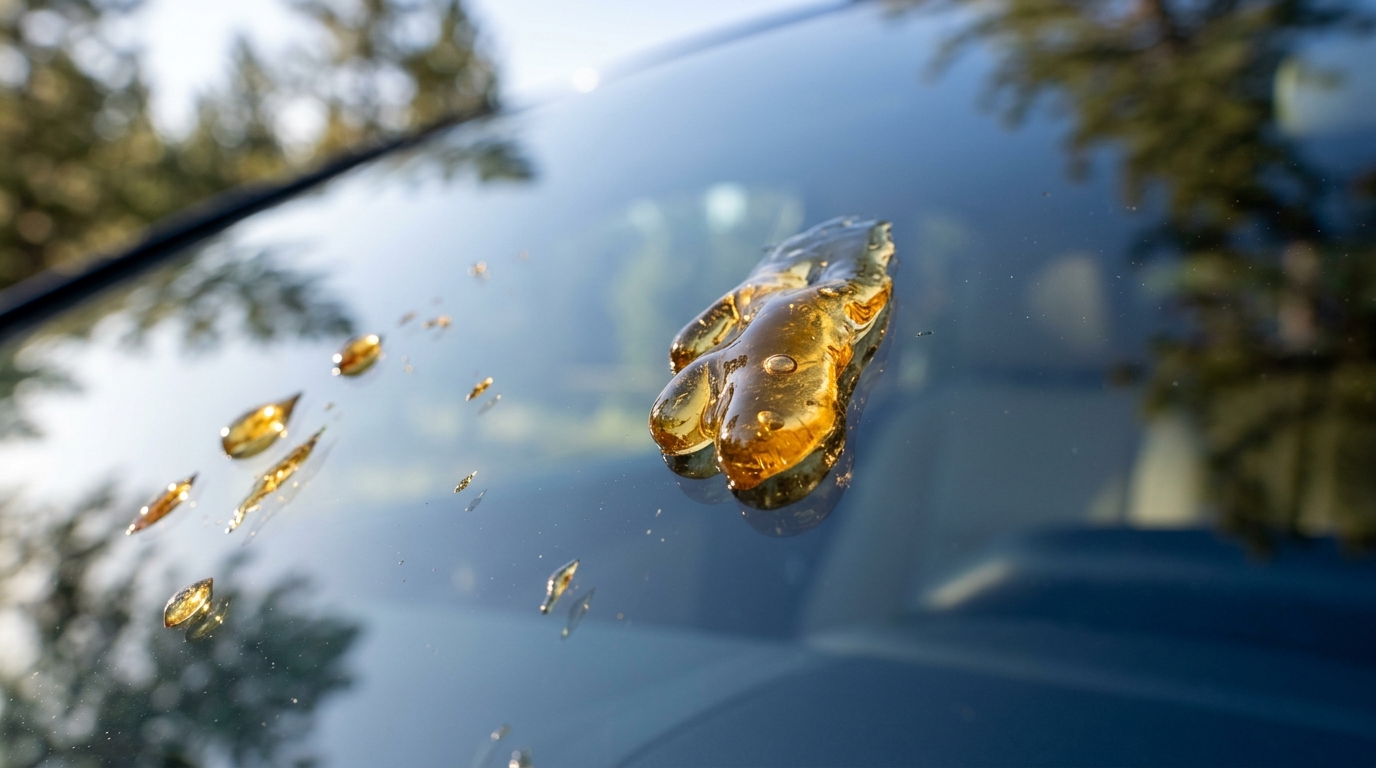 Figure 1: Tree sap droplets on glass harden into tough resin bonds under solar heat, requiring proper chemical breakdown to remove safely.
You pull out of a shaded parking spot on a warm summer afternoon, glance at your windshield, and there it is: a splatter of sticky, amber-colored tree sap directly in your line of sight. Your instinct is immediately to squirt windshield washer fluid and hit the wiper blades. But as the wipers swipe across the glass, the sap doesn’t wash away. Instead, it smears into a broad, blurry streak across your view, coating your wiper rubber in sticky resin and leaving your windshield in worse shape than before.
Tree sap—especially pine pitch, maple sap, and oak sap—is one of the most stubborn contaminants an automobile owner encounters. Unlike ordinary dust, mud, or water spots, tree sap is composed of complex organic resins and terpene hydrocarbons that harden under sun exposure. Once baked onto your car glass, sap bonds chemically to the surface, becoming almost as hard as amber.
Attempting to scrub dried sap off glass with dry towels, rough abrasive pads, or improper tools can lead to permanent windshield scratches, ruined wiper blades, and damaged paint around your windshield frame.
In this comprehensive guide, we will break down how to get tree sap off windshield glass safely using 7 tested techniques, ranging from household items like rubbing alcohol and hand sanitizer to professional detailing solutions like glass clay bars and razor scraping. Whether you’re dealing with fresh sticky drops or months-old rock-hard sap spots, this step-by-step handbook covers everything you need to know.
Before diving into deep automotive care, feel free to explore our main learning hub or learn more about our team and explore our comprehensive FAQ section if you have any questions regarding our guides.
Understanding Tree Sap Chemistry: Why Is It So Hard to Remove?
To remove tree sap efficiently, it helps to understand why plain soap and water fail to dissolve it.
Tree sap is a sticky fluid transported through plant cells. It contains sugars, water, mineral elements, and heavy organic resinous compounds (terpenes, resin acids, and esters). When sap drops onto your windshield:
- Volatile Evaporation: The liquid water content quickly evaporates in warm air.
- Polymerization: Solar ultraviolet (UV) radiation and atmospheric oxygen cause the terpene molecules to cross-link and polymerize.
- Mechanical Bonding: The resin settles into microscopic pores on the surface of your glass.
Because tree sap resin is non-polar and hydrophobic (water-repelling), standard water-based automotive glass cleaners or car wash shampoos cannot dissolve the molecular bond. To break down hardened pine pitch, you must use organic solvents (such as alcohols, hydrocarbons, or oils) that dissolve the resin matrix without etching the glass.
According to automotive safety guidelines published by AAA Auto Glass Safety, maintaining crystal-clear windshield visibility is vital for driver reaction times and advanced driver assistance systems (ADAS) camera tracking.
Essential Supplies You Need Before Starting
Before attempting any sap removal method, gather the right tools. Using the wrong cloth or a dirty rag can drag microscopic dirt particles across your glass, leaving fine scratches.
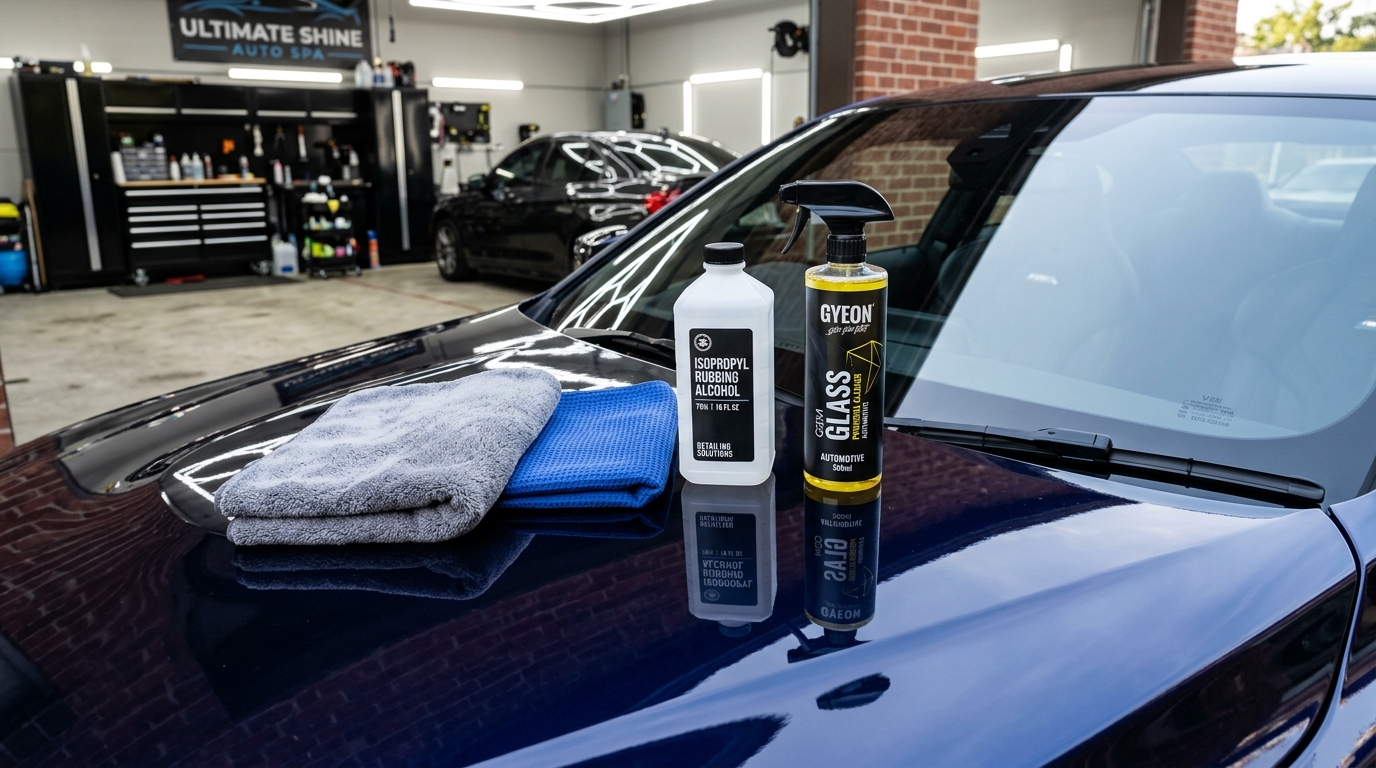 Figure 2: Essential supplies for glass sap removal including 70%+ Isopropyl Rubbing Alcohol, automotive glass cleaner, and high-GSM plush microfiber towels.
Here is your recommended toolkit:
- High-Quality Microfiber Towels: Look for plush towels with a GSM (grams per square meter) rating of 350 to 500. Microfiber traps dissolved sap without scratching.
- Isopropyl Rubbing Alcohol (70% or 91% Concentration): The single most reliable solvent for tree resin.
- Hand Sanitizer Gel: Excellent for vertical glass surfaces because the gel clings without running.
- Commercial Bug & Tar Remover: Formulated with petroleum distillates designed specifically for tree sap, asphalt tar, and bug splatter.
- Single-Edge Razor Blade Tool with Plastic Grip: For carefully lifting thick, hardened sap nodes.
- Automotive Glass Cleaner: Ammonia-free glass spray to clean remaining solvent residue.
- Lubricating Detail Spray or Soapy Water: Crucial for any blade or clay bar operation.
If you ever need help or have questions about our maintenance tutorials, don’t hesitate to reach out on our contact page or check our roadmap guides.
Method 1: Isopropyl Rubbing Alcohol (The Gold Standard)
If there is a universal secret weapon among professional auto detailers for removing tree sap from glass, it is Isopropyl Rubbing Alcohol (IPA).
Because rubbing alcohol is an effective organic solvent, it rapidly breaks down pine pitch resin bonds without leaving chemical film or damaging laminated glass.
Step-by-Step Application:
- Wash the Windshield First: Rinse your windshield with clean water or auto shampoo to remove surface grit, dust, and sand. Wiping alcohol over a dirty windshield will drag grit across the glass and cause swirl marks.
- Saturate a Microfiber Towel: Pour a generous amount of 70% or 91% isopropyl alcohol onto a clean microfiber towel or cotton pad.
- Perform the “Dwell Time” Technique: Place the alcohol-soaked towel directly over the sap spot. Press down gently and hold it in place for 30 to 60 seconds. This allows the alcohol to penetrate and liquefy the hardened resin.
- Wipe Softened Sap Away: Using light pressure, wipe the sap spot in a small circular motion. You will feel the sticky resistance give way as the sap dissolves into the towel.
- Fold to a Fresh Towel Side: Always flip your microfiber towel to a clean section for each spot to avoid smearing dissolved resin back onto the glass.
- Finish with Glass Cleaner: Spray the area with an ammonia-free glass cleaner and buff dry with a waffle-weave glass towel for a streak-free finish.
Pro Tip: Keep a small spray bottle of 70% isopropyl alcohol and a microfiber towel in your glove box during spring and summer months. Catching sap within 24 hours makes removal 5x easier!
Method 2: Hand Sanitizer (The On-the-Go Emergency Fix)
What if you discover tree sap while on a road trip or parked at work, far away from your garage detailing cabinet? The answer is right in your pocket or cup holder: alcohol-based hand sanitizer.
Why Hand Sanitizer Works So Well:
Hand sanitizer gel typically contains between 60% and 70% ethyl alcohol or isopropanol. The gel formulation offers an unexpected advantage over liquid rubbing alcohol: it does not run down vertical windshield glass. The gel sits directly on top of the sap droplet, keeping the solvent in constant contact with the resin.
Step-by-Step Guide:
- Squirt a nickel-sized drop of alcohol-based hand sanitizer directly onto the tree sap deposit.
- Let the gel sit undisturbed for 1 to 2 minutes.
- Take a clean microfiber cloth or soft tissue paper and gently massage the spot in circular movements.
- Wipe clean with a damp microfiber cloth to remove any glycerin or conditioning additives left by the sanitizer gel.
Method 3: Commercial Bug, Tar & Sap Removers
When dealing with a vehicle that was parked under an evergreen pine tree for several weeks, you might find dozens of dried resin spots scattered across the entire windshield. In heavy contamination scenarios, spot-treating each drop with alcohol can take hours. This is where commercial bug and tar removers excel.
Products like Goo Gone Automotive, Turtle Wax Bug & Tar Remover, Stoner Car Care Tarinator, and 3M Adhesive Remover are engineered with aliphatic hydrocarbon solvents that melt heavy organic resins on contact.
How to Use Commercial Sap Removers:
- Shake Well: Shake the product bottle thoroughly to mix active solvent agents.
- Spray Generously: Spray the product evenly across the contaminated glass areas.
- Allow Dwell Time: Let the product dwell on the glass for 2 to 3 minutes. Do not let it dry completely under direct sunlight.
- Agitate Gently: Use a plush microfiber sponge or towel to agitate the softened sap spots.
- Rinse and Wash: Wash the windshield with warm automotive soap and water to strip away remaining chemical solvent film.
For more technical guides on structural maintenance and workflow optimization, explore our technical breakdown on SAP ABAP Data Elements and ABAP Dictionary Architecture.
Method 4: The Razor Blade Technique for Hardened Caked-On Sap
When tree sap has been baked under intense summer sun for months, it can harden into thick, rock-like crusts. Chemical solvents alone may take a long time to break through the outer crystallized shell. In these extreme cases, carefully scraping with a razor blade is the fastest method.
WARNING: Scraping glass with a razor blade requires proper technique. Improper angle or dry scraping will gouge your windshield. Follow these safety rules strictly.
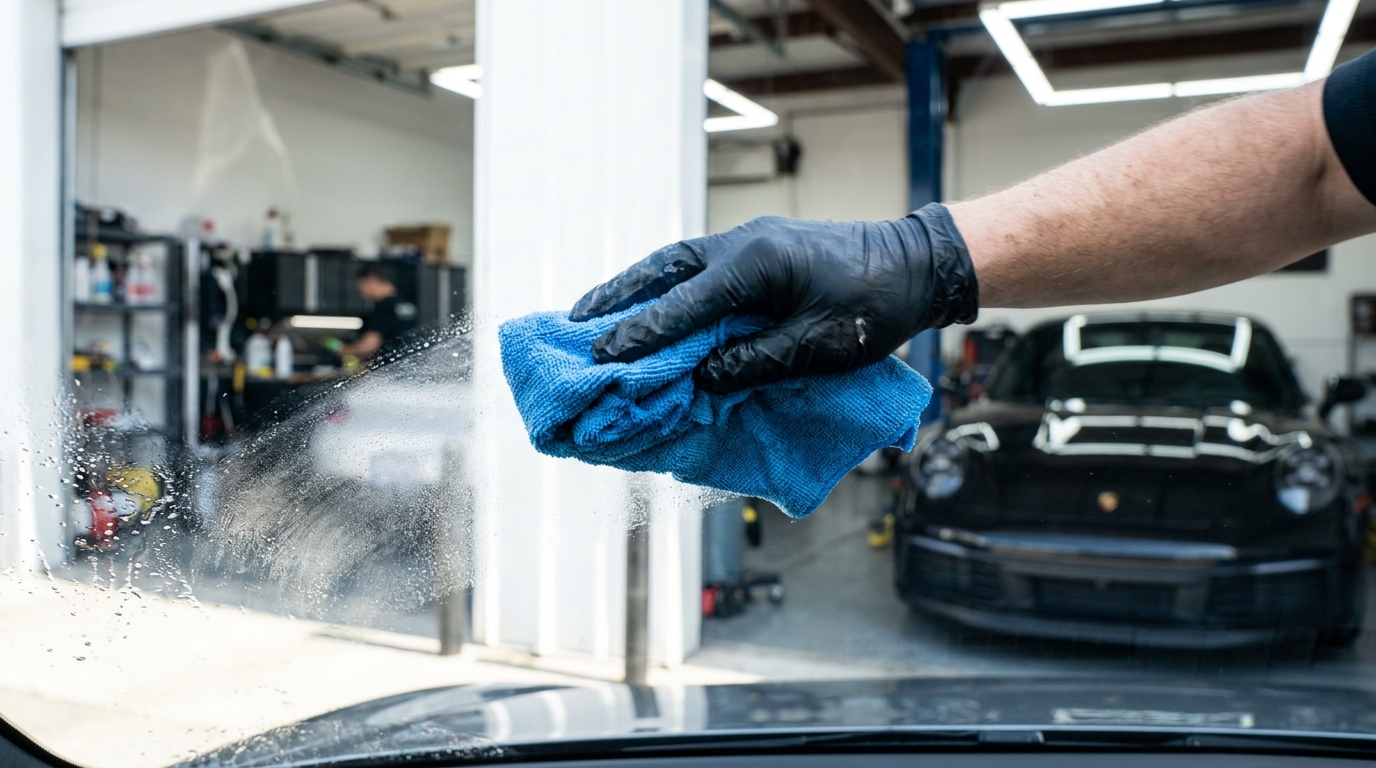 Figure 3: Wiping down automotive glass with lubricated towels ensures scratch-free residue removal.
5 Critical Rules for Razor Blade Safety on Glass:
- Never Scrape Dry Glass: Always lubricate the glass with automotive glass cleaner, soapy water, or quick detailer spray before touching the glass with a blade.
- Maintain a 45-Degree Angle: Hold the razor blade flat at a 30 to 45-degree angle relative to the glass surface. Never scrape at a 90-degree perpendicular angle.
- Use a Fresh Blade: Inspect your blade for rust, nicks, or burrs. A damaged razor blade will scratch glass instantly.
- Push Forward Only: Push the blade forward across the sap spot. Never drag the blade backward or sideways.
- Do NOT Use on Tinted Side or Aftermarket Glass Films: Only use razor blades on the outside surface of factory glass. Never use razor blades on interior glass tinted films.
Step-by-Step Razor Removal Procedure:
- Spray glass cleaner liberally over the hardened tree sap spot to form a slick lubricant cushion.
- Apply a drop of rubbing alcohol on top of the sap spot to soften the core.
- Hold your single-edge safety razor blade (equipped with a plastic holder for grip) at a 45-degree angle.
- Place the sharp edge of the blade just behind the sap spot and push forward smoothly. The blade will slide under the sap dot, popping it cleanly off the glass.
- Wipe away the lifted sap crust with a microfiber towel and clean the glass thoroughly.
Method 5: Household Penetrating Oils (WD-40 or Mineral Oil)
If you don’t have rubbing alcohol or dedicated bug remover at home, WD-40, mineral oil, or coconut oil can serve as effective sap softeners.
How Penetrating Oils Work:
Penetrating oils contain light petroleum distillates and lubricants. They seep under the sap boundary layer and break down the sticky adhesion between the resin and your glass windshield.
Application Steps:
- Spray a small amount of WD-40 or apply a few drops of mineral oil onto a cotton ball or microfiber rag.
- Rub the oiled cloth over the sap spot for 30 seconds.
- Allow the oil to soak into the sap for 5 minutes.
- Wipe the softened sap away with a clean cloth.
- Crucial Follow-up: Because oils leave a greasy film that causes severe wiper blade smearing during rain, you must wash the glass thoroughly with an grease-cutting glass cleaner or diluted dish soap afterward.
Method 6: White Vinegar & Warm Water Solution
For car owners seeking an eco-friendly, chemical-free home remedy, distilled white vinegar is a solid option.
White vinegar contains acetic acid (around 5% concentration), which helps break down mild, fresh organic sap deposits while dissolving hard water spots at the same time.
Instructions:
- Mix equal parts distilled white vinegar and warm water in a spray bottle.
- Spray the solution onto the sap-affected areas of your windshield.
- Place a warm, damp microfiber towel over the area and let it sit for 5 minutes.
- Rub the sap gently in circular motions until it dissolves.
- Rinse the windshield with clean water and wipe dry with a waffle-weave microfiber towel.
Note: While vinegar works well on fresh sap, it is less effective on old, heavily crystallized pine pitch than isopropyl alcohol.
Method 7: Clay Bar & Glass Polish Treatment for Micro-Residue
Even after removing the main body of a sap drop, a faint sticky ring or hazy micro-residue often remains embedded in the glass pores. When your windshield wipers run over these micro-deposits, they chatter, squeak, and leave fine water streaks.
Using an automotive detailing clay bar or glass polish removes these microscopic contaminants, leaving your windshield glass slick and optically clear.
How to Clay Bar Your Windshield:
- Wash and dry your windshield completely.
- Spray a generous amount of clay lubricant or quick detailer across the glass surface.
- Flatten a piece of automotive detailing clay (synthetic clay mitt or traditional clay bar) into a small disk.
- Glide the clay back and forth over the glass using light pressure. You will hear and feel the clay grabbing onto invisible sap bumps.
- Continue claying until the glass feels 100% glass-smooth.
- Wipe off lubricant residue with a microfiber towel.
Comprehensive Comparison Table of Sap Removal Methods
Here is a quick overview of how the 7 methods compare in terms of speed, safety, cost, and effectiveness:
| Removal Method | Effectiveness | Glass Safety | Paint Safety | Dwell Time Needed | Cost Level |
|---|---|---|---|---|---|
| Isopropyl Alcohol (70-91%) | ⭐⭐⭐⭐⭐ (Best Overall) | 100% Safe | Safe (Rinse after) | 30 - 60 seconds | $ (Under $3) |
| Hand Sanitizer Gel | ⭐⭐⭐⭐ (Great Emergency) | 100% Safe | Safe (Rinse after) | 1 - 2 minutes | $ (Under $2) |
| Bug & Tar Remover | ⭐⭐⭐⭐⭐ (Best Heavy Duty) | 100% Safe | 100% Safe | 2 - 3 minutes | $$ ($8 - $15) |
| Lubricated Razor Blade | ⭐⭐⭐⭐⭐ (Fastest Crust Removal) | Safe (If 45° angle) | ⚠️ Unsafe on Paint | 0 seconds | $ (Under $5) |
| WD-40 / Penetrating Oil | ⭐⭐⭐ (Good Household) | 100% Safe | Safe (Must wash off) | 3 - 5 minutes | $ (Under $6) |
| White Vinegar Solution | ⭐⭐⭐ (Mild / Eco) | 100% Safe | Safe | 5 minutes | $ (Under $2) |
| Detailing Clay Bar | ⭐⭐⭐⭐ (Best Finishing) | 100% Safe | 100% Safe | Continuous glide | $$ ($12 - $20) |
If you are interested in exploring structured workflow automation and technical system architecture guides, check out our articles on SAP BTP Cloud Connector and SAP ABAP Debugging Guide.
What NOT To Do: 5 Common Mistakes That Ruin Your Windshield
When dealing with annoying tree sap, frustration can lead to costly mistakes. Avoid these 5 common pitfalls:
1. Never Turn On Wiper Blades Over Dry Sap
Activating your windshield wipers over sticky tree sap will ruin your wiper rubber blades instantly. Sap tears the delicate rubber edge, leading to permanent streaking. Furthermore, it spreads sticky resin across the entire arc of your wiper path.
2. Avoid Abrasive Scouring Pads or Steel Wool (Grade 0 or Higher)
Never use kitchen scouring pads, green Scotch-Brite sponges, or coarse steel wool on car glass. They contain abrasive aluminum oxide crystals that will etch fine micro-scratches into your glass, creating severe glare during night driving. (Only ultra-fine Grade #0000 steel wool used with glass lubricant is safe, but alcohol is far safer).
3. Don’t Let Solvents Drip and Dry on Car Paint
While isopropyl alcohol and bug removers are safe on glass, leaving strong solvents to sit on car clear coat under hot sun can dull or strip wax and protective sealant layers. Always rinse adjacent paint panels with clean water after cleaning your windshield.
4. Never Scrape Dry Glass
Attempting to scrape dry sap off dry glass with any blade, credit card, or tool increases friction and can scratch the glass. Always apply a liquid lubricant first.
5. Don’t Work on a Hot Windshield Under Direct Sun
When glass is hot to the touch, solvents like rubbing alcohol evaporate almost instantly before they have time to dissolve the sap resin. Always work in the shade or inside a garage on cool glass.
How to Clean Tree Sap Off Your Windshield Wiper Blades
Often, car owners clean their windshield perfectly, only for the sap to reappear the moment it rains. Why? Because tree sap got transferred onto the rubber edges of the wiper blades.
Cleaning your wiper blades takes less than two minutes:
- Lift the windshield wiper arms up into the service position.
- Dampen a microfiber towel with 70% isopropyl alcohol.
- Pinch the rubber wiper blade edge gently inside the alcohol-dampened cloth.
- Slide the cloth up and down the length of the rubber blade several times.
- You will see black grime and yellow sap residue transfer onto the cloth.
- Repeat until the cloth comes away clean, then lower the wiper arms back onto the windshield.
How to Protect Your Windshield & Prevent Tree Sap Adhesion
The best way to deal with tree sap is to prevent it from bonding to your windshield glass in the first place. Here are 4 proven preventative measures:
1. Apply a Hydrophobic Glass Coating or Rain Repellent
Applying a quality ceramic glass coating or hydrophobic glass treatment (such as Rain-X, Aquapel, or Gtechniq G1 ClearVision) creates a slick, non-stick barrier over your windshield. When tree sap lands on a coated windshield, it cannot penetrate the glass pores. The sap rests on top of the coating and washes off easily during a standard car wash.
2. Know Your Trees & Park Smart
Certain tree species produce significantly more airborne sap and honeydew than others:
- High Sap Risk Trees: Pine, Spruce, Fir, Birch, Maple, and Elm trees.
- Honeydew Risk: Trees infested with aphids (such as Linden or Oak trees) secrete sticky honeydew that coats vehicles parked underneath.
Whenever possible, avoid parking directly beneath overhanging branches of evergreen pine trees, especially during late spring and summer peak sap flow seasons.
3. Use a Windshield Cover or Car Cover
If you must park under trees at home or work, invest in a fitted windshield snow/sun cover or a breathable full car cover. A heavy-duty polyester windshield cover takes 30 seconds to install and protects your glass from sap, bird droppings, and fallen leaves.
4. Wash Your Car Regularly
Don’t let tree sap sit on your car for weeks. Fresh tree sap is soft and easy to clean. Once sap sits in direct sun for 14 days, UV polymerization hardens the resin into amber crust. Washing your vehicle every 1 to 2 weeks prevents sap buildup.
Frequently Asked Questions (FAQs)
Q1: Will rubbing alcohol damage my windshield tint?
Answer: Factory tinted glass (where the glass itself is dark) cannot be damaged by rubbing alcohol. However, if your car has an aftermarket tint film installed on the interior side of the glass, avoid using ammonia or harsh solvents on the inside. Since tree sap almost always lands on the exterior outside glass, applying isopropyl alcohol on the outside windshield surface is 100% safe.
Q2: Is acetone or nail polish remover safe to use on a car windshield?
Answer: Acetone is a very strong solvent that dissolves tree sap quickly, and it will not hurt glass. However, acetone will melt plastic trim, rubber windshield seals, and damage car paint clear coat instantly if spilled. Because of the high risk of accidental drips onto paint or wiper seals, rubbing alcohol or commercial bug removers are much safer choices.
Q3: Can tree sap permanently damage windshield glass?
Answer: Glass is an extremely hard, non-porous material, so tree sap usually does not etch glass the way it etches clear coat car paint. However, if left unattended for months, tree sap can bond so tightly that removing it improperly ( dry scraping or using harsh abrasives) leaves physical scratch marks.
Q4: Does hot water melt tree sap off windshields?
Answer: Hot water can soften fresh, soft sap, but it will not dissolve heavy pine pitch resin on its own. Never pour boiling water on a cold windshield, as thermal shock can instantly crack laminated automotive glass. Always use room-temperature water combined with isopropyl alcohol.
Q5: How do I remove tree sap from car paint without ruining the clear coat?
Answer: To remove sap from painted body panels, use 70% Isopropyl alcohol or a paint-safe Bug & Tar remover on a soft microfiber towel. Soak the spot for 60 seconds, gently wipe without scrubbing hard, rinse with water, and re-apply a protective car wax or sealant to the area afterward.
Final Thoughts & Key Takeaways
Removing sticky tree sap from your car windshield doesn’t have to be a frustrating or scratch-inducing ordeal. By understanding that tree sap requires an organic solvent to break down its resin structure, you can restore crystal-clear optical clarity to your glass in just a few minutes.
Quick Action Summary:
- For Fresh Sticky Sap: Use 70% or 91% Isopropyl Rubbing Alcohol on a plush microfiber towel with 30 seconds of dwell time.
- For On-the-Go Emergency Cleanups: Use alcohol-based hand sanitizer gel.
- For Hardened Rock-Like Crusts: Lubricate the glass generously with glass cleaner and slide a fresh single-edge razor blade at a 45-degree angle.
- For Prevention: Coat your windshield with a hydrophobic glass sealant so future sap drops slide off effortlessly.
By following these safe auto glass care methods, you protect your windshield glass, preserve your wiper blades, and ensure optimal driving visibility in all weather conditions.
Want to explore more technical guides, system tutorials, and detailed breakdowns? Visit our latest blog articles, check out our career roadmap resources, or get in touch through our contact page.

Written by Daksh Dedha
SAP Technical ConsultantDaksh is an SAP Technical Consultant specializing in ABAP programming, SAP S/4HANA migrations, Fiori development, and BTP cloud architecture. He authors free, hands-on tutorials to make enterprise SAP education accessible to all developers.
Test Your Knowledge
Loading question...
Quiz Completed
Related Tutorials
What is SAP? The Ultimate Enterprise Guide to SAP ERP, Architecture & Modules
A technical and beginner-friendly deep dive into what SAP is, how Enterprise Resource Planning (ERP) works, its 3-tier and S/4HANA architecture, core modules, real-world business workflows, and career paths.
SAP FinanceSAP Accounting Software: The Ultimate Guide to SAP S/4HANA Finance & FICO
Discover how SAP accounting software powers global enterprise finance. Explore SAP FICO modules, Universal Journal (ACDOCA), S/4HANA Finance migration, and real-time ledger accounting.
ABAP ProgrammingSAP ABAP Enhancement Framework — User Exits, BADIs, and Enhancement Points
Master SAP ABAP enhancements. Learn User Exits, Customer Exits, BADIs, Enhancement Points, and Implicit/Explicit Enhancement Spots to modify standard SAP without modifying source code.
Found this tutorial useful? Share it with your SAP development team.