First ABAP Program in SAP – Complete Beginner’s Guide
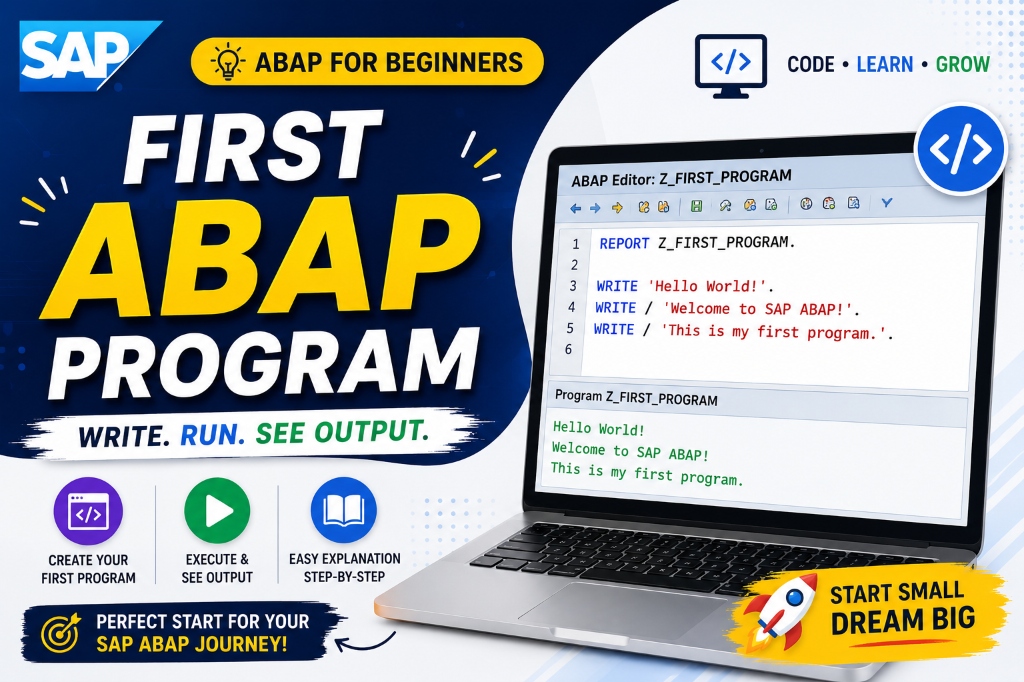
Learn how to write, save, activate, and run your first SAP ABAP program using transaction SE38 (Hello World) in a step-by-step beginner guide.
Join 10,000+ SAP developers and consultants. Get one highly actionable SAP tip, code snippet, or guide delivered straight to your inbox daily.
Master SAP ABAP, Fiori, HANA, BTP, and Basis through interactive, daily bite-sized lessons.
Hone your technical expertise. Reveal a practical SAP GUI shortcut or test your theory knowledge in our daily micro-quiz.
Click the button below to reveal an advanced SAP transaction code trick, debug command, or editor shortcut.
Type an SAP Transaction Code or function keyword (e.g., 'SE11', 'debug', 'sales') to instantly discover its purpose, module, and detailed developer tips.
No transaction codes found
Try adjusting your search or selecting a different module filter.
Deep dive into comprehensive tutorials on modern SAP extensibility, database modeling, cloud integration, and systems configuration.
Learn how to write, save, activate, and run your first SAP ABAP program using transaction SE38 (Hello World) in a step-by-step beginner guide.
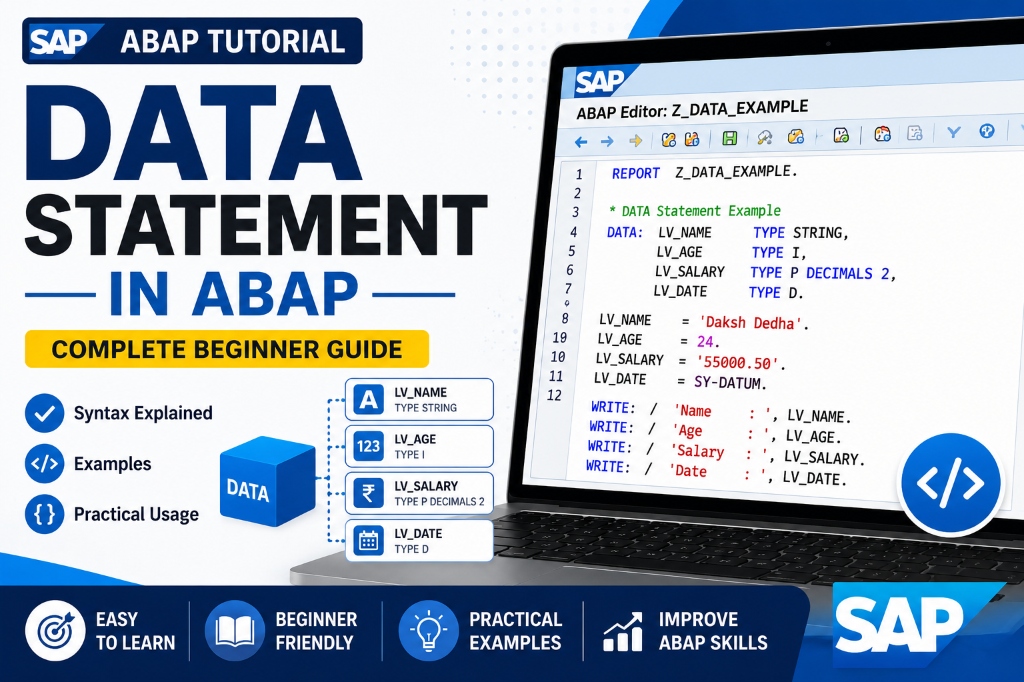
Learn how to declare variables in SAP ABAP using the DATA statement, follow standard naming conventions, and practice with practical code examples.
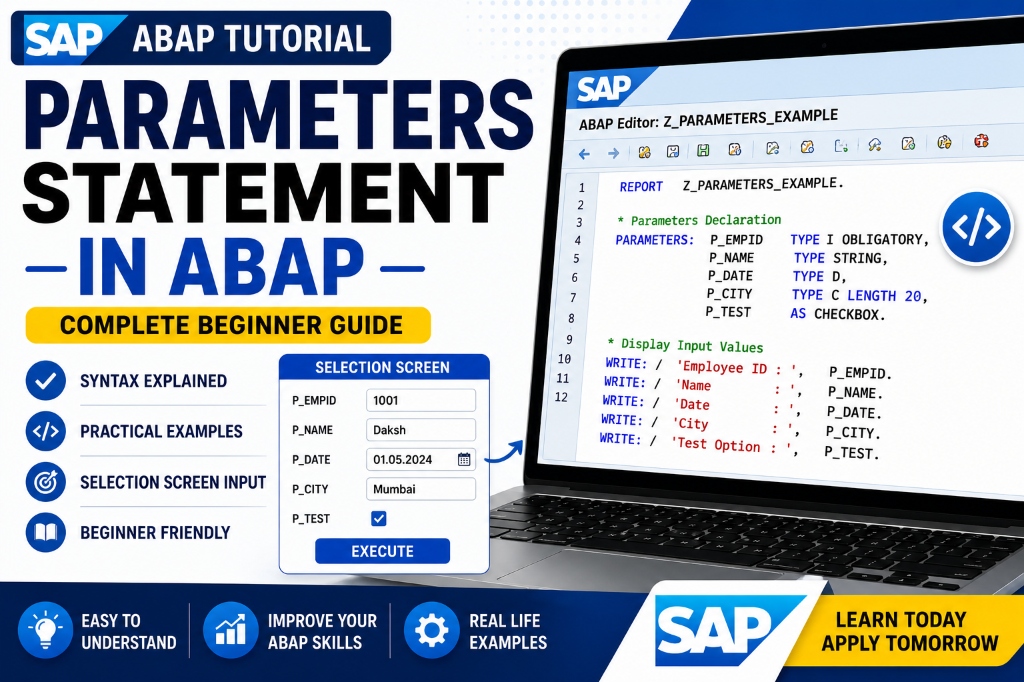
Learn how to capture user input in SAP ABAP using the PARAMETERS statement. Master checkboxes, radio buttons, obligatory fields, default values, and best practices.
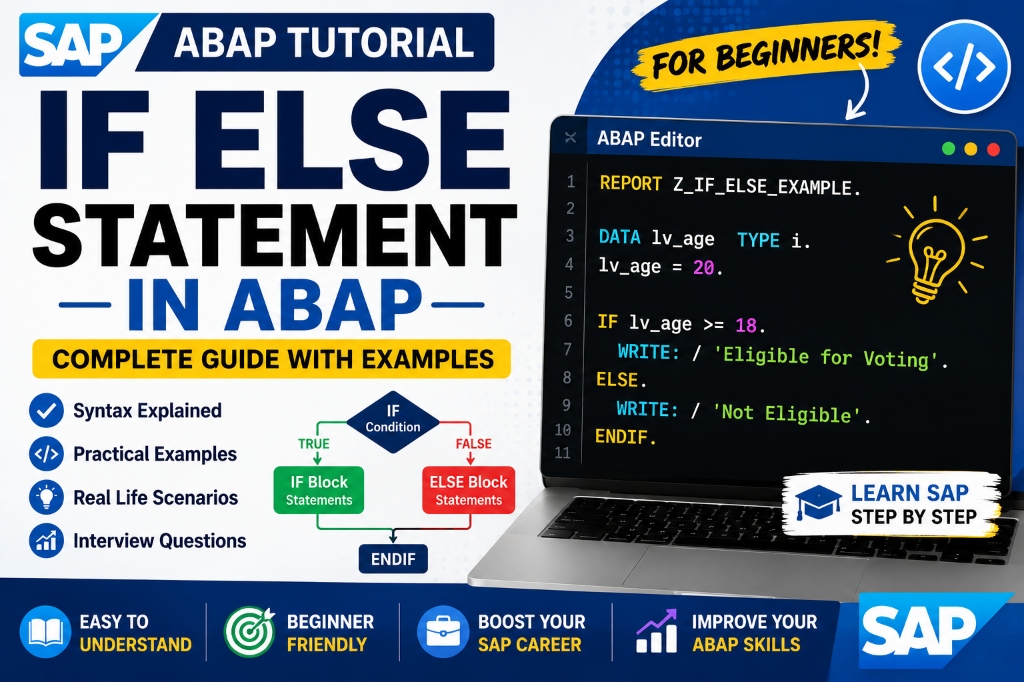
Learn how to write decision-making logic in SAP ABAP using IF, ELSE, and ELSEIF statements. Master logical operators, comparison operators, and best practices.
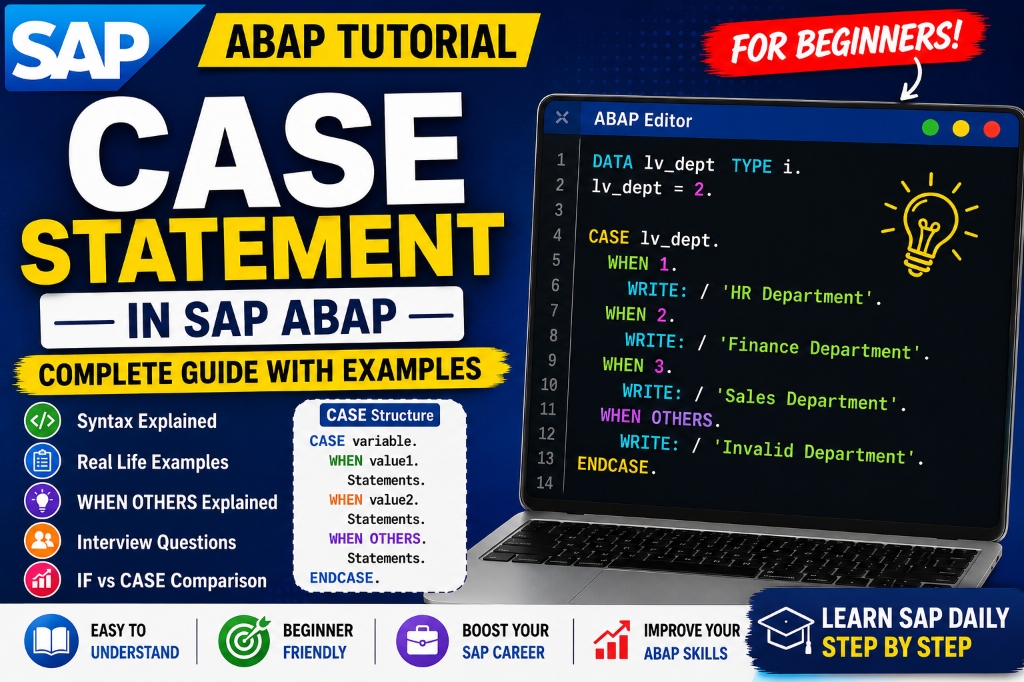
Learn how to write multi-branch decision-making logic in SAP ABAP using CASE, WHEN, and WHEN OTHERS. Master best practices, examples, and interview questions.
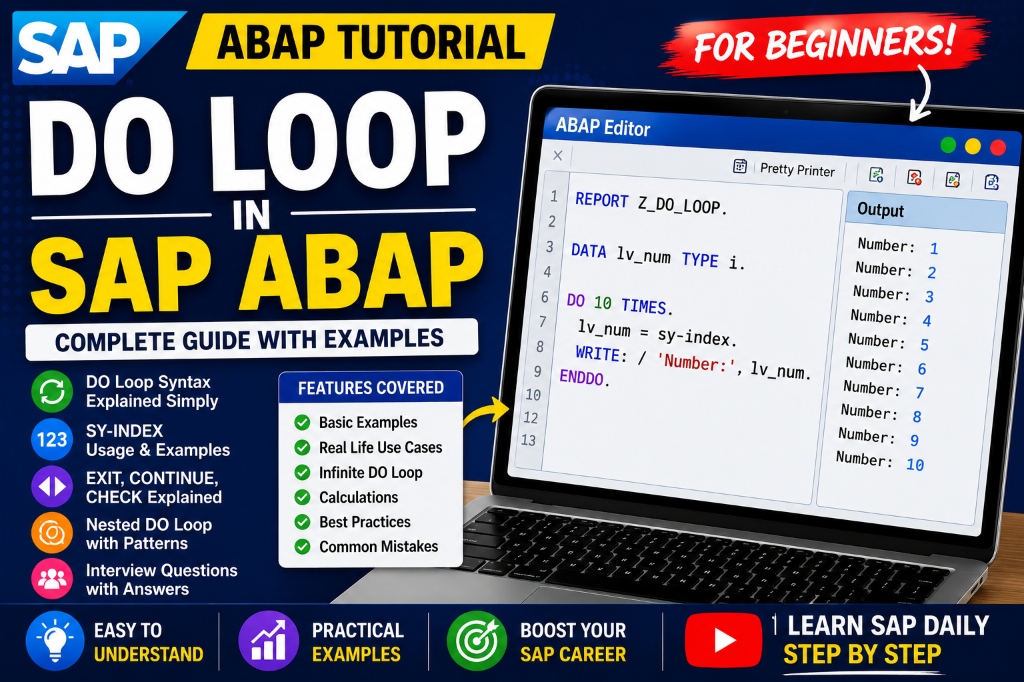
Learn how to use DO loops in SAP ABAP to repeat block execution. Master index tracking with SY-INDEX, infinite loops, and EXIT/CONTINUE statement control.
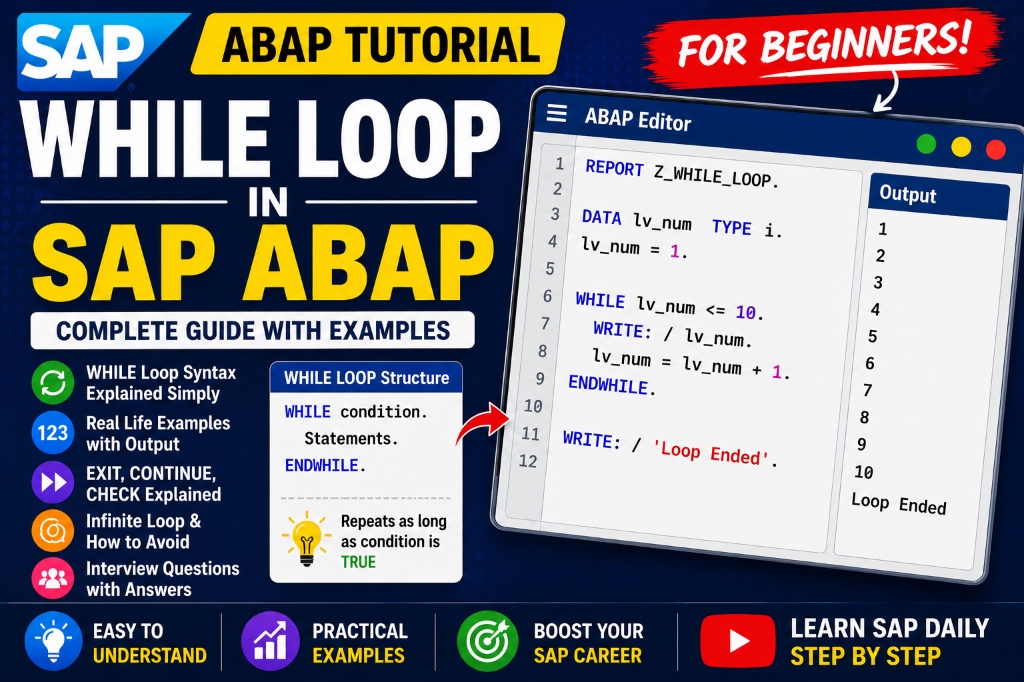
Learn how to write WHILE loops in SAP ABAP. Master condition-based execution, index tracking, infinite loops, and control statements (EXIT, CONTINUE, CHECK) with real-world examples.
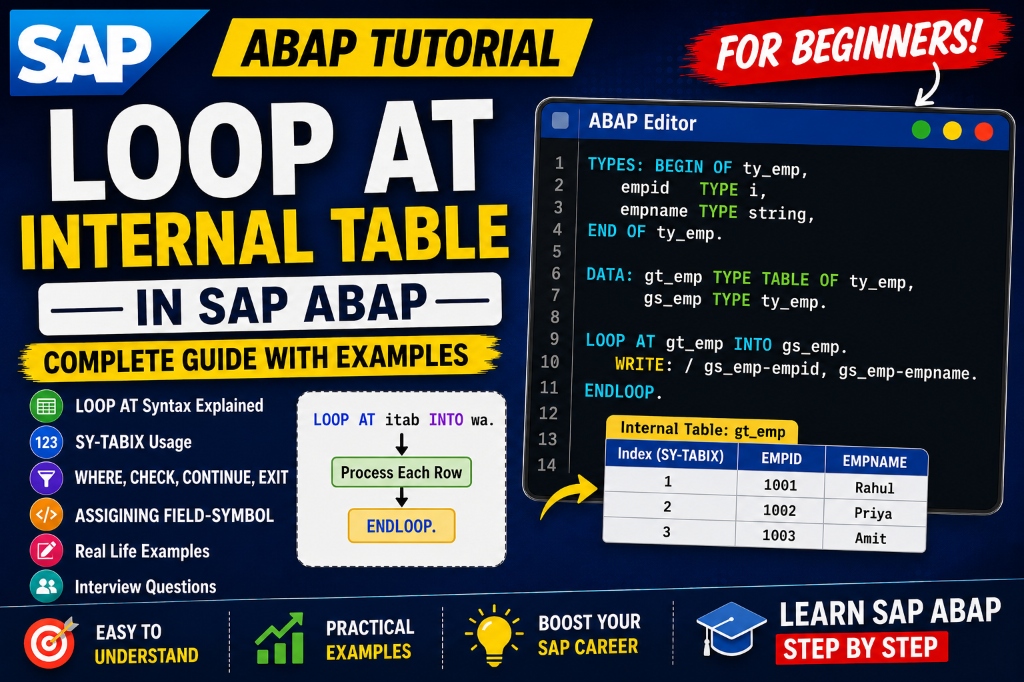
Master the LOOP AT statement in SAP ABAP. Learn how to iterate over internal tables, use SY-TABIX, WHERE conditions, FIELD-SYMBOLS, and loop control statements (EXIT, CONTINUE, CHECK) with real-world examples.
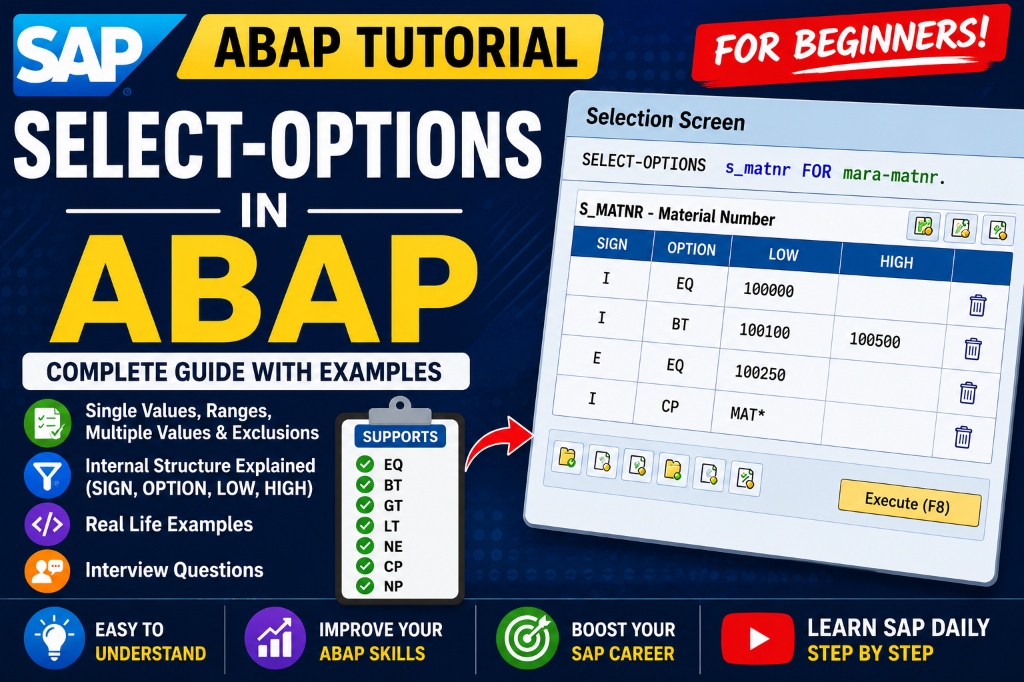
Master SELECT-OPTIONS in SAP ABAP. Learn how to design flexible selection screens, process low/high range limits, include/exclude values, and implement database queries.
Master the fundamentals of the ABAP Dictionary (Data Dictionary), database tables (Transparent, Pooled, Cluster), domains, data elements, and relationships.
Understand domains in SAP ABAP, their reusability, and the step-by-step process to create a domain in the ABAP Dictionary.
A complete guide to understanding, creating, and using Data Elements in SAP ABAP — with examples, tables, and step-by-step instructions.
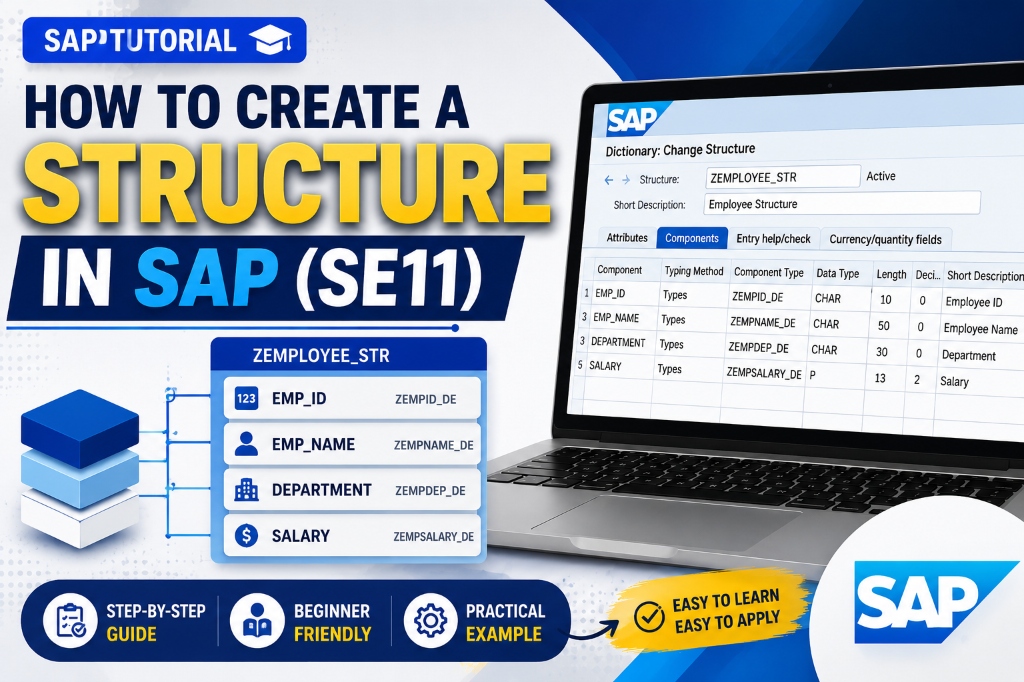
Learn what a structure is in SAP ABAP, how it differs from a database table, and the step-by-step process to create and use structures in ABAP programs.
Learn how to create custom database tables in SAP ABAP using transaction code SE11, maintain data with SE16N, and configure technical settings.
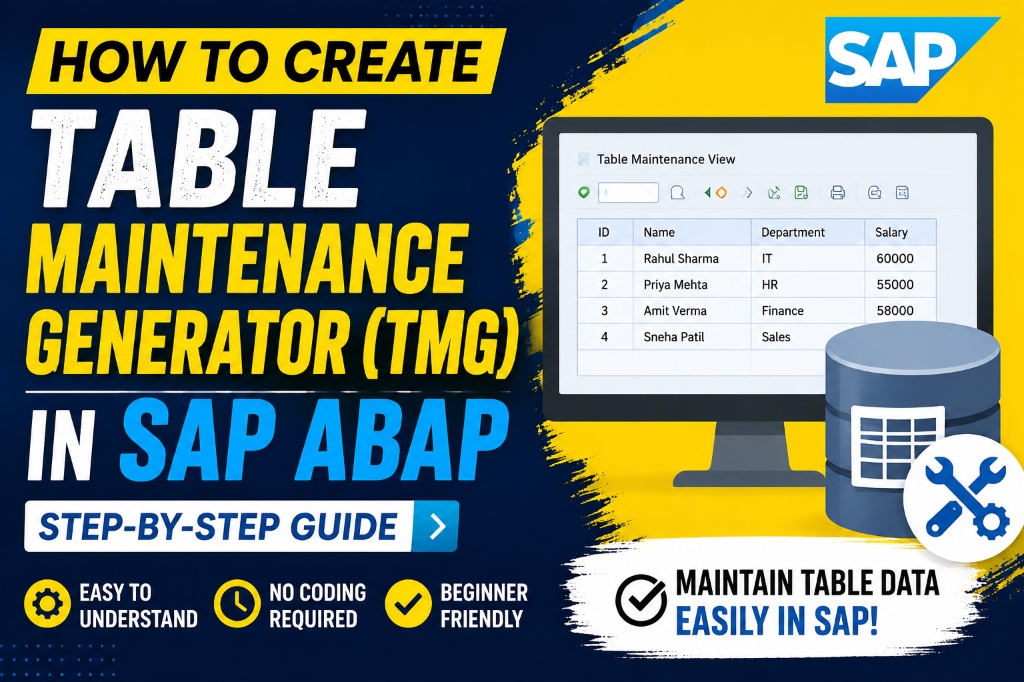
Learn how to create a Table Maintenance Generator (TMG) in SAP ABAP using transaction code SE11, maintain data with SM30, and avoid common mistakes.
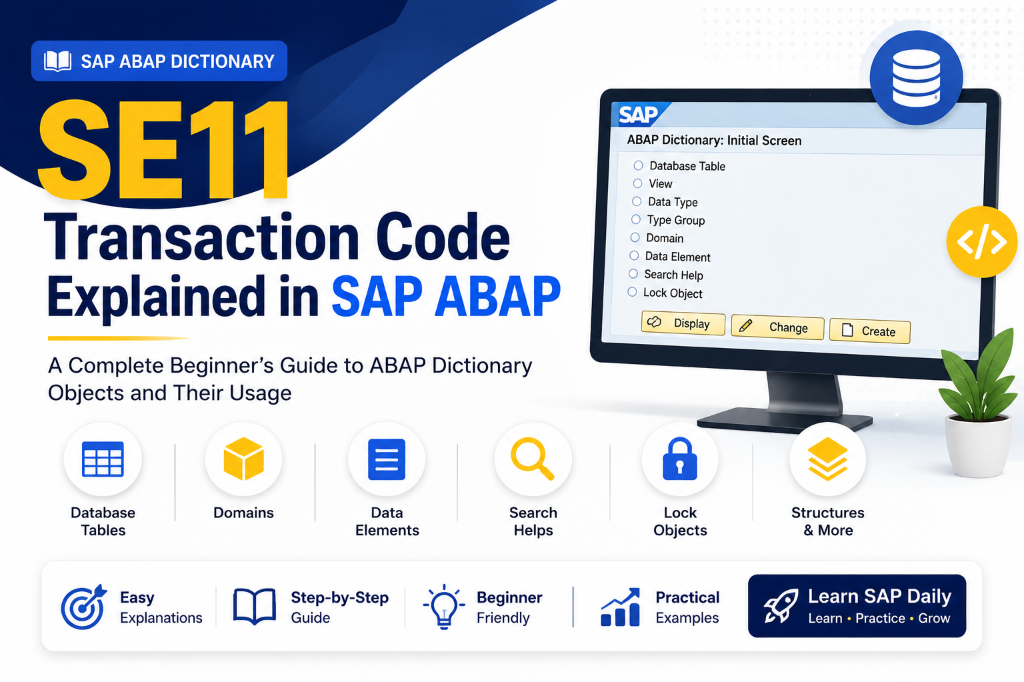
Master the fundamentals of the SE11 transaction code in SAP ABAP. Learn how to navigate the ABAP Dictionary, create tables, domains, views, search helps, and lock objects.
Prepare for your first SAP ABAP job interview. Master transaction codes, Domain vs Data Element differences, Transparent tables, Internal tables, work areas, BAPIs, IDocs, and debugging.
Discover career opportunities in SAP for freshers. Read our step-by-step roadmap to master functional and technical tracks, choose the right module, and secure your first job.
Kickstart your career as an SAP ABAP developer. Read our step-by-step learning path, master essential transaction codes, write resumes, and prepare for interviews.
Subscribe to get step-by-step video tutorials on SAP ABAP programming, transaction codes, structures, table maintenance generators, and database configurations. Build your skills with easy-to-follow visual walkthroughs.
If you are looking to advance your career in enterprise technology, learning how to manage, develop, and integrate ERP systems is one of the most valuable decisions you can make. If you are asking yourself "how do I learn SAP" or "how can I learn SAP" without paying thousands of dollars for expensive training academies, you have come to the right place. This platform is built to help professionals and developers learn SAP for free, using practical daily tips, interactive quizzes, and transaction code lookup tools.
SAP is the world's leading enterprise resource planning (ERP) system, used by over 90% of Fortune 500 companies. To understand how to learn SAP software, you must first understand the distinction between functional business modules and technical development platforms. If you want to learn SAP online, you should start by mastering the basic navigation of the SAP logon GUI. From there, you can choose a specialized path. Many students choose to learn SAP ERP core concepts to understand business workflows in procurement, finance, or inventory management.
Another common question beginners ask is: how long does it take to learn SAP? There is no single answer. If you want to learn basic operations and data entry, it can take less than two weeks. However, if you want to master configuration, build database tables, or learn SAP BPC by yourself for business planning and consolidation, you should expect to spend 3 to 6 months of daily practice. The best way to learn SAP is by breaking down your studies into daily, bite-sized tasks rather than reading thousands of pages of legacy manuals.
For software developers, the most popular entry point is ABAP (Advanced Business Application Programming). Our website provides extensive guides on how to learn SAP abap. When you learn SAP abap, you study how data elements, domains, and database tables interact in the ABAP Dictionary. To learn SAP abap online with us, you don't need access to an expensive dedicated server—you can start by understanding the basic syntax and structures through our practice challenges. Once you master the fundamentals, you can build custom database objects, design user interfaces, and write high-performance reports.
As the industry moves toward cloud infrastructure, developers must look beyond legacy NetWeaver systems. To build cloud-ready software, you need to learn SAP HANA, which is SAP's fast, in-memory relational database. Additionally, it is highly recommended to learn SAP BTP (Business Technology Platform) to build side-by-side extensibility applications. These modern frameworks allow you to write services using Node.js or Java while integrating directly with S/4HANA core systems.
For business and finance professionals, functional paths offer excellent career trajectories. You can learn SAP Ariba to manage cloud-based procurement, supplier networks, and spend analysis. For corporate finance, learning to learn SAP BPC by yourself helps you master planning, budgeting, forecasting, and consolidation processes. Each functional area uses its own set of standard transactions and workflows, which you can practice using our lookup guides.
You do not need massive budgets to master these technologies. You can learn SAP free by leveraging resources like the official SAP Help Portal, the SAP Developer Center, and community tutorials. Our mission at Learn SAP Free is to provide the ultimate way to learn sap online free by delivering daily snippets, practice quizzes, and interactive tools right to your browser. By dedicating just 15 minutes a day to practicing transaction codes and resolving keybind challenges, you can build the skills needed to configure and develop enterprise software.

"SAP systems are core to global commerce, yet learning them remains siloed behind heavy manuals and legacy interfaces. We started Learn SAP Free to make SAP training actionable, responsive, and aesthetically engaging."

Learn SAP Free Community · Dedicated to Practical & Theoretical Excellence