
SAP Joule — The AI Copilot That Is Changing How the World Uses SAP in 2026
Table of Contents
- • What Is SAP Joule — Plain English First
- • Why Did SAP Build Joule Now — The Timing Makes Sense
- • How Joule Works Technically — Under the Hood
- ↳ Foundation Model Layer
- ↳ SAP Knowledge Graph
- ↳ Retrieval Augmented Generation (RAG)
- ↳ Role-Based Access Enforcement
- • Where Joule Is Already Live — Product by Product
- ↳ SAP S/4HANA Cloud — Finance and Operations
- ↳ SAP SuccessFactors — Human Resources
- ↳ SAP Ariba — Procurement and Sourcing
- ↳ SAP BTP — Development and Integration
- ↳ SAP Analytics Cloud
- • Interactive Joule Prompt Simulator
- • What Joule Cannot Do — Being Honest
- • What SAP Joule Means for SAP Professionals — Career Impact
- ↳ Functional Consultants
- ↳ ABAP Developers
- ↳ Integration Specialists
- ↳ Basis Administrators
- ↳ The New Opportunity — AI Extension Developers
- • How to Stay Ahead — What to Learn Right Now
- • SAP Joule vs Microsoft Copilot — The Comparison Everyone Makes
- • Real Scenario — One Day With Joule in 2026
- • Final Thoughts — Why Joule Matters More Than Most SAP News
- • Self-Assessment Checkpoint
 Figure 1: SAP Joule serves as the unified generative AI assistant embedded across the entire corporate ERP and platform portfolio.
Okay so here is something that genuinely surprised me when I first read about it.
SAP announced that Joule — their AI copilot — would eventually be embedded across their entire product portfolio. Not just one module. Not just one product. Everything. S/4HANA, SuccessFactors, Ariba, Concur, BTP, Analytics Cloud, Integration Suite — Joule everywhere.
And my first reaction was — wait, is this just another tech company slapping “AI” on existing features and calling it revolutionary? Because we’ve all seen that happen too many times in the last two years.
So I dug into it properly. Read the actual SAP documentation, watched demo videos, followed what real consultants were saying on SAP Community, tracked the release notes from SAP’s latest announcements.
And honestly? Joule is more substantive than I expected. It’s not perfect, it’s not magic, and it’s not replacing SAP professionals anytime soon. But it is genuinely changing how end users interact with SAP — and that change has real implications for everyone working in this ecosystem.
This post is my honest, complete breakdown of SAP Joule — what it actually is, how it works under the hood, where it’s already live, what it can and cannot do, and what it means for your career in SAP.
Let’s go through this properly.
What Is SAP Joule — Plain English First
SAP Joule is SAP’s generative AI copilot — a natural language AI assistant embedded directly inside SAP products that lets users interact with SAP using plain conversational language instead of navigating menus, entering T-codes, or knowing where specific functions live.
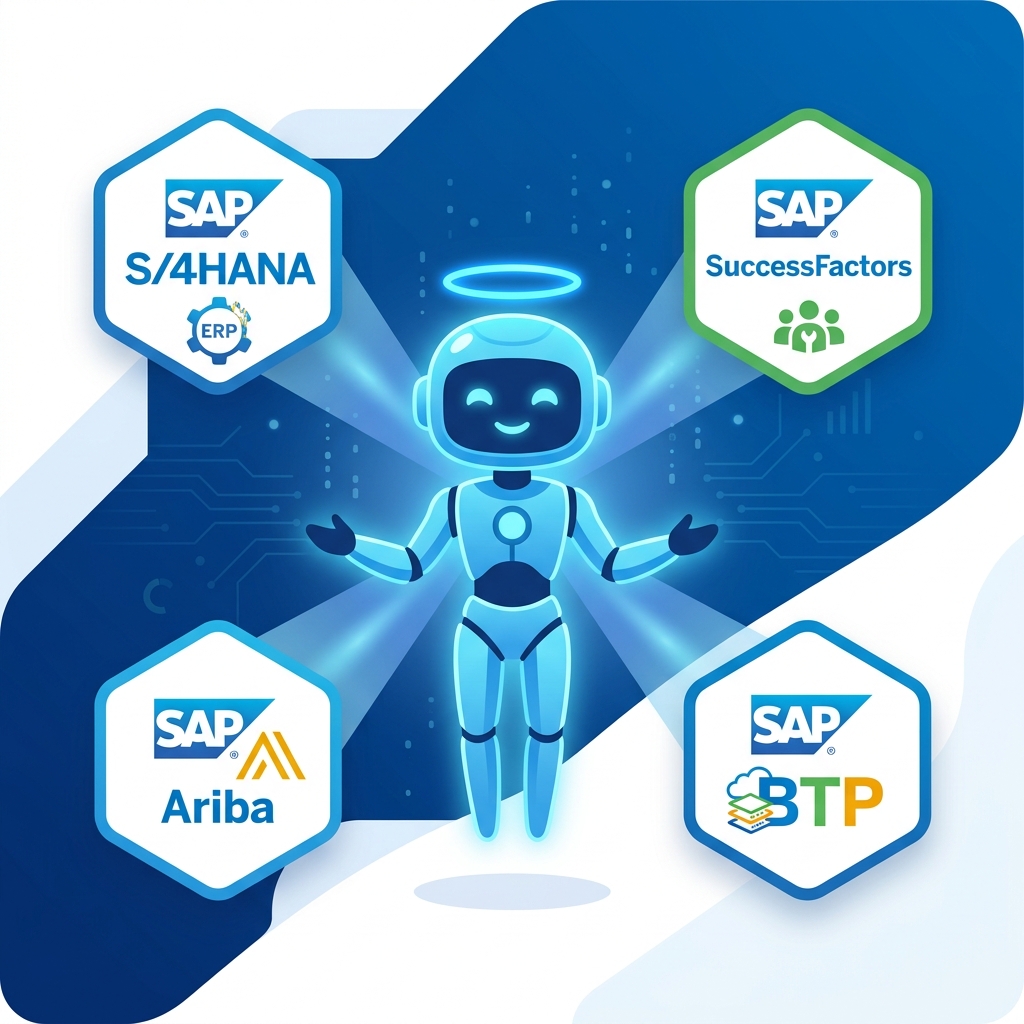 Figure 2: Joule acts as the conversational interface layer across S/4HANA, SuccessFactors, Ariba, and BTP.
Instead of a user needing to know that Material Master is maintained in MM03, or that Goods Issue is posted through MIGO, or that a payment run is executed through F110 — they just ask Joule in plain language and Joule either performs the action, surfaces the relevant information, or guides them to exactly the right place.
That’s the core idea. Natural language as the new interface layer on top of SAP.
But Joule goes beyond simple Q&A. It’s designed to:
- Understand context — know which SAP product you’re in, what your role is, what you were doing previously.
- Take actions — not just answer questions but actually perform tasks inside SAP on your behalf.
- Surface insights — proactively flag anomalies, risks, and opportunities without being asked.
- Generate content — write job descriptions, draft emails, create summaries, generate reports.
- Explain processes — walk users through SAP processes step by step in their own language.
SAP announced Joule in September 2023 and has been rolling it out progressively across their product suite since then. By 2026, it’s live across many SAP products with more being added each quarter.
Why Did SAP Build Joule Now — The Timing Makes Sense
SAP didn’t jump on AI yesterday. They’ve been embedding machine learning into SAP products since 2018 — intelligent invoice matching, predictive analytics in IBP, cash flow prediction in Treasury, skills matching in SuccessFactors.
But those were narrow, task-specific ML models. Good at one thing, invisible everywhere else.
Generative AI — specifically large language models — changed the equation at its core. Suddenly it became possible to build an assistant that could understand any question phrased any way, reason across multiple data sources, and produce coherent responses and actions.
Three things aligned to make Joule happen in 2023-2024:
- LLM technology matured — models like GPT-4 demonstrated that language understanding had reached a level where enterprise AI assistants were genuinely viable, not just demos.
- SAP data advantage — SAP processes an enormous percentage of the world’s business transactions. They have deep, structured, semantically rich business data — purchase orders, financial documents, HR records, supply chain events. That business context makes SAP’s AI more relevant than a generic AI assistant because it understands what these documents mean, not just what they say.
- User adoption pressure — S/4HANA and Fiori made SAP more modern visually, but business users still found SAP complex. Natural language as interface layer was a logical next step in reducing that complexity.
Joule is SAP’s answer to all three — a generative AI copilot that sits on top of SAP’s business data, understands SAP context deeply, and makes the entire product suite more accessible.
How Joule Works Technically — Under the Hood
You don’t need to understand every technical detail here, but having a high-level picture of how Joule works helps you understand both its capabilities and its current limitations.
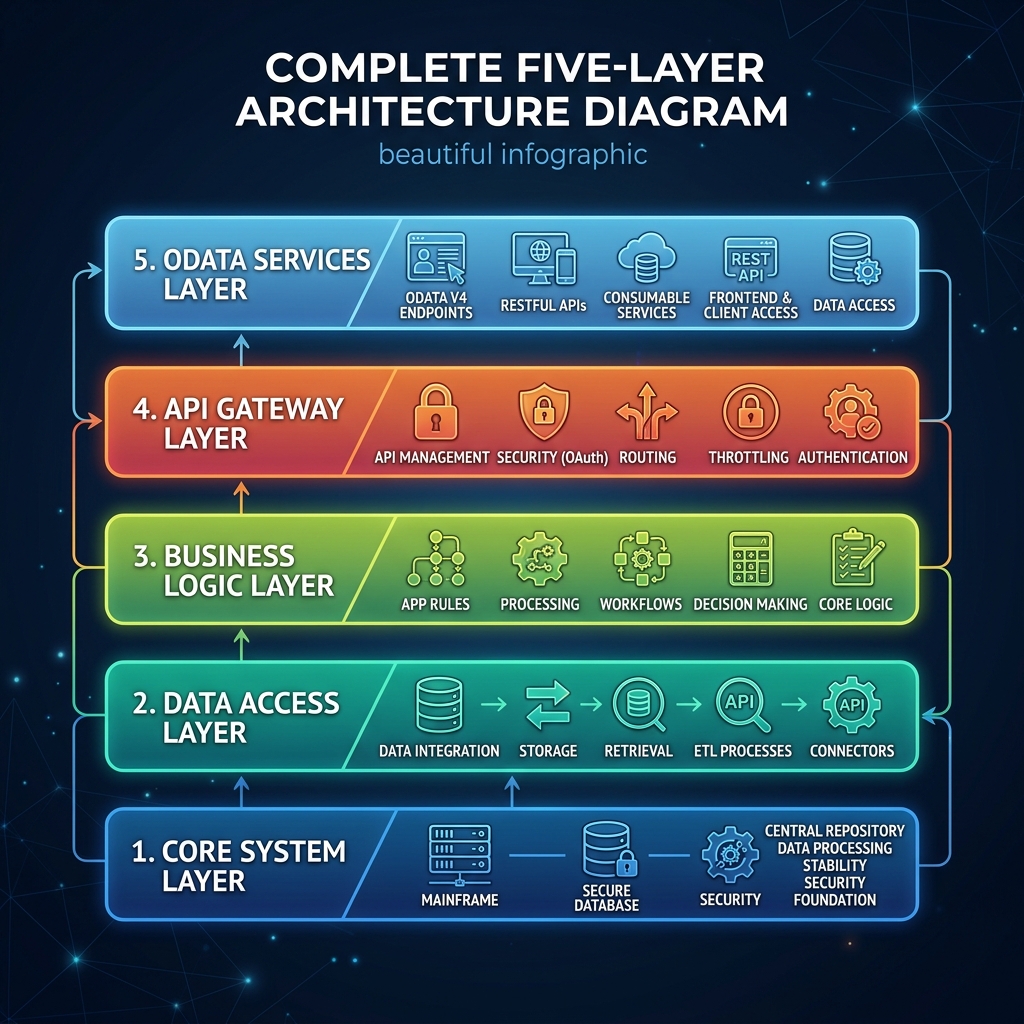 Figure 3: Multi-model foundations, RAG pipelines, and security layers composing the Joule runtime.
Foundation Model Layer
Joule doesn’t run on one single AI model. SAP built Joule on a multi-model architecture — meaning it can use different underlying LLMs depending on the task. SAP partners with multiple AI providers — Microsoft Azure OpenAI, Google Vertex AI — and also develops proprietary SAP-specific models.
This multi-model approach means SAP can use the best model for each task — a specialized model for HR scenarios, a different one for financial analysis, another for code generation in ABAP.
SAP Knowledge Graph
This is what makes Joule specifically useful for SAP tasks rather than a generic AI assistant.
SAP built a business knowledge graph — a structured representation of SAP’s entire product landscape, data models, business processes, and terminology. When you ask Joule “show me all overdue customer invoices for this quarter,” Joule doesn’t just search for keywords — it understands that “customer invoices” maps to specific S/4HANA tables and data entities, that “overdue” means a specific status condition, and that “this quarter” needs to be calculated against current date and fiscal year configuration.
That business semantic understanding is what separates Joule from pasting your question into ChatGPT.
Retrieval Augmented Generation (RAG)
For questions about company-specific data — your actual purchase orders, your specific employees, your financial figures — Joule uses RAG. It retrieves relevant data from SAP systems in real-time, combines it with the language model’s reasoning capability, and generates a response grounded in your actual business data.
This is critical for accuracy. A generic AI model might hallucinate business figures. Joule grounds its responses in actual retrieved data — making answers reliable for business decisions.
Role-Based Access Enforcement
Joule respects SAP’s existing authorization framework. If a warehouse clerk doesn’t have authorization to see salary data, asking Joule about salaries won’t bypass that restriction. Joule checks authorizations before surfacing any data — the same way standard SAP transactions do.
This is non-negotiable for enterprise adoption. A copilot that bypasses security would be unusable in regulated industries.
Where Joule Is Already Live — Product by Product
Let me go through exactly which SAP products have Joule integration as of 2026 and what it does in each.
SAP S/4HANA Cloud — Finance and Operations
Joule in S/4HANA covers several scenarios actively:
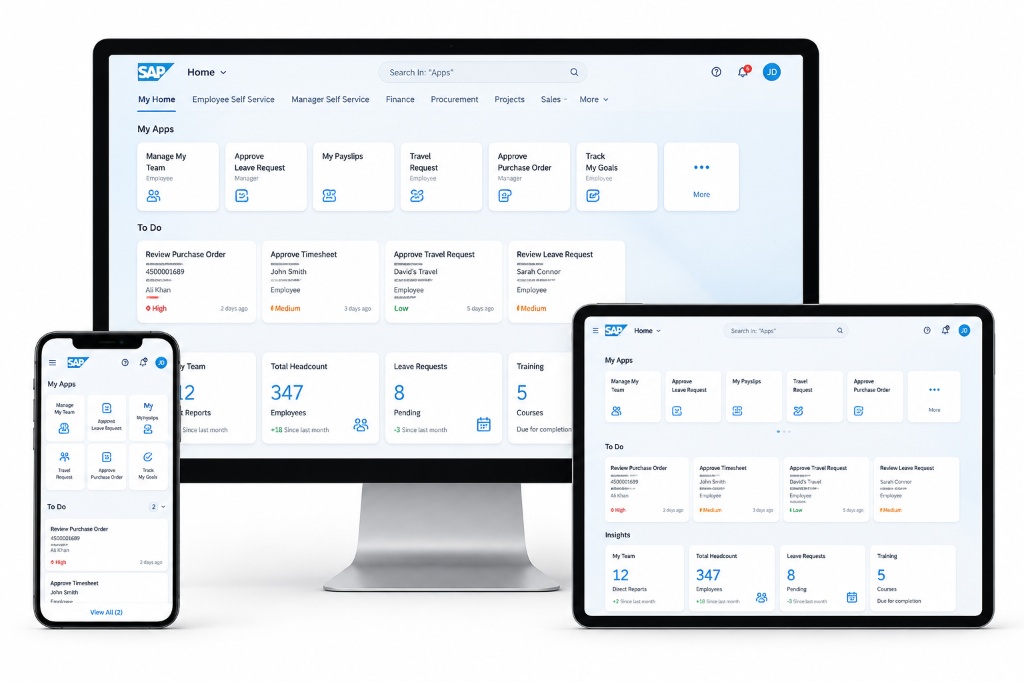 Figure 4: Natural language queries surfacing general ledger open items inside S/4HANA Fiori.
- Financial Close Assistance: Accountants can ask “what journal entries are still open for this period?” or “show me accounts with unusual posting activity this month” — Joule surfaces answers with drill-down links directly.
- Procurement Guidance: Buyers ask “which purchase orders are pending goods receipt for more than 30 days?” — Joule pulls the list with direct navigation links to each document.
- Exception Management: Joule proactively flags — “3 supplier invoices have been parked for over 15 days, would you like to review them?” — without the user needing to run a report.
- Process Navigation: New users ask “how do I create a goods receipt?” — Joule doesn’t just answer with instructions but opens the correct Fiori app with pre-filled context where possible.
SAP SuccessFactors — Human Resources
This is one of Joule’s most mature integration areas:
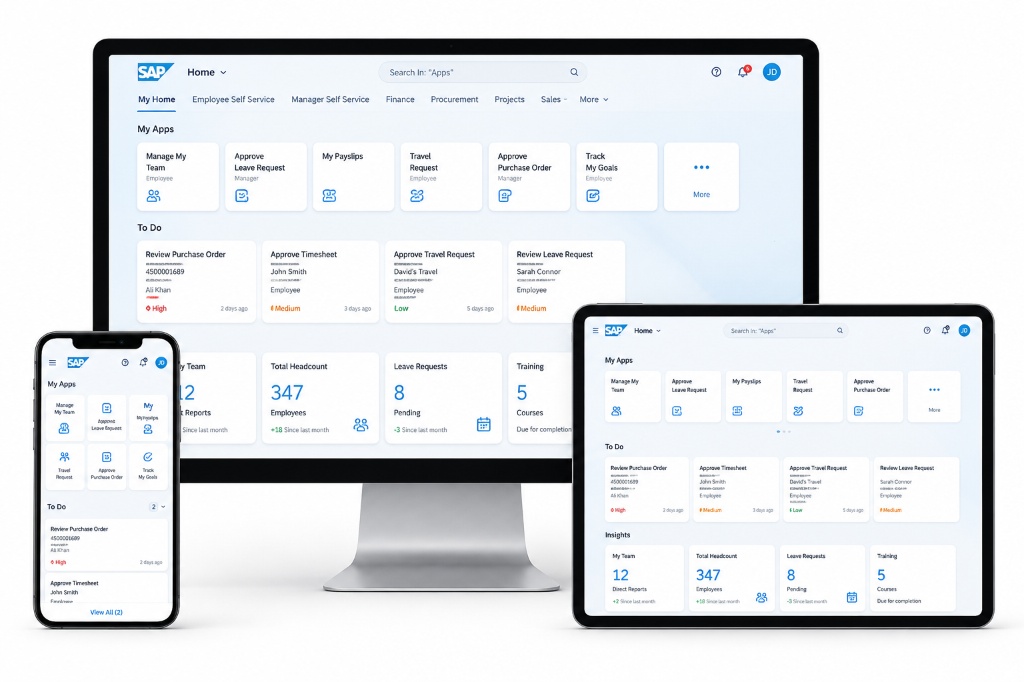 Figure 5: HR Candidate screening lists and job description builders.
- Job Description Generation: HR managers describe a role in plain language — “we need a senior data engineer with cloud experience, 5 years minimum, Bangalore based” — Joule generates a complete, professionally formatted job description following company templates and compliance requirements.
- Candidate Screening Assistance: Recruiters ask “which candidates for the Product Manager role have consumer app experience?” — Joule searches across applicant profiles and surfaces relevant matches with reasoning.
- Employee Self-Service: Employees ask “how many leave days do I have left?” or “what is the process for applying for paternity leave?” — Joule answers instantly from their personal HR data and company policies.
- People Analytics: HR business partners ask “what is our attrition trend in engineering over the last two years?” — Joule generates a visual summary with key insights highlighted.
SAP Ariba — Procurement and Sourcing
- Supplier Discovery: Category managers ask “find suppliers for industrial valves with ISO certification in Southeast Asia” — Joule searches Ariba Network’s supplier database and surfaces relevant options.
- Contract Intelligence: Legal and procurement teams ask “does our contract with Vendor X include a price adjustment clause?” — Joule reads contract documents and answers with specific clause references.
- Spend Analysis: “What percentage of our office supplies spend went to non-preferred suppliers last quarter?” — Joule pulls spend analytics and flags compliance gaps.
SAP BTP — Development and Integration
- ABAP Code Generation: Developers describe what they need — “write an ABAP function module that reads vendor master data by company code and returns open invoices” — Joule generates syntactically correct ABAP code as a starting point.
- Integration Flow Assistance: Integration developers ask “how do I configure OAuth2 authentication in an Integration Suite iFlow?” — Joule provides step-by-step guidance with code snippets.
- Error Analysis: When a BTP deployment fails, developers ask Joule “why did this deployment fail?” — Joule reads error logs and explains the root cause in plain language with suggested fixes.
SAP Analytics Cloud
- Natural Language Queries: Business users ask “what were our top 5 revenue-generating products in North region last quarter?” — Joule generates a chart directly without the user needing to know how to build one.
- Insight Narration: Joule automatically generates written summaries of dashboard data — “Revenue is up 12% versus last quarter, driven primarily by product category X. However, margin has declined 2% due to increased logistics costs in the West region.”
- Planning Assistance: Finance planners ask “based on last year’s trend, what should we budget for marketing in Q3?” — Joule suggests figures with historical data backing.
Interactive Joule Prompt Simulator
Review Joule in action across various business modules below. Click on any scenario tab to see the user’s natural language input and Joule’s contextual response:
  <button class="scenario-btn active-scenario w-full text-left p-2.5 rounded text-[12px] font-semibold transition-all border outline-none bg-primary/5 text-primary border-primary flex flex-col gap-0.5" data-scenario="finance">
    <span>Finance Close</span>
    <span class="text-[9px] font-normal text-ink-muted-80">S/4HANA Ledger Status</span>
  </button>

  <button class="scenario-btn w-full text-left p-2.5 rounded text-[12px] font-semibold transition-all border outline-none bg-transparent border-hairline text-ink hover:bg-canvas-parchment flex flex-col gap-0.5" data-scenario="hr">
    <span>HR Recruiter</span>
    <span class="text-[9px] font-normal text-ink-muted-80">SuccessFactors Candidate</span>
  </button>

  <button class="scenario-btn w-full text-left p-2.5 rounded text-[12px] font-semibold transition-all border outline-none bg-transparent border-hairline text-ink hover:bg-canvas-parchment flex flex-col gap-0.5" data-scenario="procurement">
    <span>Supplier Search</span>
    <span class="text-[9px] font-normal text-ink-muted-80">Ariba Supplier Network</span>
  </button>

  <button class="scenario-btn w-full text-left p-2.5 rounded text-[12px] font-semibold transition-all border outline-none bg-transparent border-hairline text-ink hover:bg-canvas-parchment flex flex-col gap-0.5" data-scenario="abap">
    <span>ABAP Code Gen</span>
    <span class="text-[9px] font-normal text-ink-muted-80">BTP Developer Assist</span>
  </button>

  <button class="scenario-btn w-full text-left p-2.5 rounded text-[12px] font-semibold transition-all border outline-none bg-transparent border-hairline text-ink hover:bg-canvas-parchment flex flex-col gap-0.5" data-scenario="analytics">
    <span>SAC Analytics</span>
    <span class="text-[9px] font-normal text-ink-muted-80">Insight Generation</span>
  </button>
</div>

<div class="flex-1 flex flex-col justify-between overflow-hidden bg-canvas-parchment">
  <div id="chat-messages" class="flex-1 p-4 overflow-y-auto flex flex-col gap-4 text-[13px] leading-relaxed">

    <!-- Scenario Panels -->
    <!-- FINANCE -->
    <div id="scen-finance-panel" class="scenario-panel flex flex-col gap-4 h-full">
      <div class="flex flex-col gap-1 items-end">
        <span class="text-[10px] text-ink-muted-48 mr-1">User</span>
        <div class="bg-primary text-white p-3 rounded-lg rounded-tr-none max-w-[85%] font-medium">
          "Which journal entries are still open for this period?"
        </div>
      </div>
      <div class="flex flex-col gap-1 items-start">
        <span class="text-[10px] text-ink-muted-48 ml-1">Joule</span>
        <div class="bg-canvas border border-hairline text-ink p-3 rounded-lg rounded-tl-none max-w-[90%] flex flex-col gap-3">
          <p>I retrieved the current general ledger status for **Period 06 (June 2026)**. There are currently **2 open journal items** requiring reconciliation before ledger close.</p>

          <div class="border border-hairline rounded overflow-hidden text-[11px]">
            <table class="w-full border-collapse">
              <thead>
                <tr class="bg-canvas-parchment text-ink font-semibold">
                  <th class="p-2 border-b border-hairline text-left">Document</th>
                  <th class="p-2 border-b border-hairline text-left">Type</th>
                  <th class="p-2 border-b border-hairline text-right">Amount (INR)</th>
                </tr>
              </thead>
              <tbody>
                <tr>
                  <td class="p-2 border-b border-hairline text-blue-600 font-mono">100092834</td>
                  <td class="p-2 border-b border-hairline">Supplier Invoice</td>
                  <td class="p-2 border-b border-hairline text-right">12,45,000.00</td>
                </tr>
                <tr>
                  <td class="p-2 border-b border-hairline text-blue-600 font-mono">100092911</td>
                  <td class="p-2 border-b border-hairline">Accrual Entry</td>
                  <td class="p-2 border-b border-hairline text-right">4,20,000.00</td>
                </tr>
              </tbody>
            </table>
          </div>
          <button class="button-pearl-capsule text-center w-full text-[11px] font-semibold py-1.5 self-center">
            Launch Month-End Close Cockpit
          </button>
        </div>
      </div>
    </div>

    <!-- HR -->
    <div id="scen-hr-panel" class="scenario-panel flex flex-col gap-4 h-full hidden">
      <div class="flex flex-col gap-1 items-end">
        <span class="text-[10px] text-ink-muted-48 mr-1">User</span>
        <div class="bg-primary text-white p-3 rounded-lg rounded-tr-none max-w-[85%] font-medium">
          "Which candidates for the Product Manager role have consumer app experience?"
        </div>
      </div>
      <div class="flex flex-col gap-1 items-start">
        <span class="text-[10px] text-ink-muted-48 ml-1">Joule</span>
        <div class="bg-canvas border border-hairline text-ink p-3 rounded-lg rounded-tl-none max-w-[90%] flex flex-col gap-3">
          <p>Scanning candidate submissions in **SuccessFactors Recruiting**. I matched **2 applicants** stating consumer-facing product experience:</p>

          <div class="border border-hairline rounded p-3 bg-canvas-parchment text-[11px] flex flex-col gap-2">
            <div>
              <span class="font-semibold text-ink">1. Priya Sharma</span> (Score: 92/100)<br/>
              - 4 years PM at Flipkart (mobile application teams).
            </div>
            <div class="border-t border-hairline pt-2">
              <span class="font-semibold text-ink">2. Rahul Varma</span> (Score: 85/100)<br/>
              - Lead Designer/PM at Zomato (ordering flow).
            </div>
          </div>
          <button class="button-pearl-capsule text-center w-full text-[11px] font-semibold py-1.5 self-center">
            Review Priya Sharma Profile
          </button>
        </div>
      </div>
    </div>

    <!-- PROCUREMENT -->
    <div id="scen-procurement-panel" class="scenario-panel flex flex-col gap-4 h-full hidden">
      <div class="flex flex-col gap-1 items-end">
        <span class="text-[10px] text-ink-muted-48 mr-1">User</span>
        <div class="bg-primary text-white p-3 rounded-lg rounded-tr-none max-w-[85%] font-medium">
          "Find ISO-certified supplier options in Southeast Asia for industrial valves."
        </div>
      </div>
      <div class="flex flex-col gap-1 items-start">
        <span class="text-[10px] text-ink-muted-48 ml-1">Joule</span>
        <div class="bg-canvas border border-hairline text-ink p-3 rounded-lg rounded-tl-none max-w-[90%] flex flex-col gap-3">
          <p>Searching **SAP Ariba Supplier Directory**. I found **2 preferred suppliers** matching: (ISO Standard, Valves Commodity, Southeast Asia Region).</p>

          <div class="border border-hairline rounded p-3 bg-canvas-parchment text-[11px] flex flex-col gap-2">
            <div>
              <span class="font-semibold text-ink">Asia Valve Corp</span> (Singapore)<br/>
              - Active ISO 9001, ISO 14001 certificates.<br/>
              - Preferred status for Company Code 1000.
            </div>
            <div class="border-t border-hairline pt-2">
              <span class="font-semibold text-ink">Indo-Flow Valves Tbk</span> (Indonesia)<br/>
              - Active ISO 9001 certificate.<br/>
              - Supplier Risk Level: Low.
            </div>
          </div>
          <button class="button-pearl-capsule text-center w-full text-[11px] font-semibold py-1.5 self-center">
            Initiate Sourcing Request (RFQ)
          </button>
        </div>
      </div>
    </div>

    <!-- ABAP -->
    <div id="scen-abap-panel" class="scenario-panel flex flex-col gap-4 h-full hidden">
      <div class="flex flex-col gap-1 items-end">
        <span class="text-[10px] text-ink-muted-48 mr-1">User</span>
        <div class="bg-primary text-white p-3 rounded-lg rounded-tr-none max-w-[85%] font-medium">
          "Generate an ABAP class declaration that reads vendor master details by company code."
        </div>
      </div>
      <div class="flex flex-col gap-1 items-start">
        <span class="text-[10px] text-ink-muted-48 ml-1">Joule</span>
        <div class="bg-canvas border border-hairline text-ink p-3 rounded-lg rounded-tl-none max-w-[90%] flex flex-col gap-3 w-full">
          <p>Here is a clean ABAP Cloud statement structure declaring the interface details:</p>

          <div class="border border-hairline rounded p-3 bg-slate-950 text-white font-mono text-[10px] overflow-x-auto leading-tight">
CLASS zcl_read_vendors DEFINITION PUBLIC.
PUBLIC SECTION.
TYPES: ty_vendor_list TYPE STANDARD TABLE OF lfa1 WITH DEFAULT KEY.
METHODS get_vendors_by_company
IMPORTING iv_bukrs TYPE bukrs
EXPORTING et_vendors TYPE ty_vendor_list.
ENDCLASS.
          </div>
          <button class="button-pearl-capsule text-center w-full text-[11px] font-semibold py-1.5 self-center">
            Copy ABAP Code
          </button>
        </div>
      </div>
    </div>

    <!-- ANALYTICS -->
    <div id="scen-analytics-panel" class="scenario-panel flex flex-col gap-4 h-full hidden">
      <div class="flex flex-col gap-1 items-end">
        <span class="text-[10px] text-ink-muted-48 mr-1">User</span>
        <div class="bg-primary text-white p-3 rounded-lg rounded-tr-none max-w-[85%] font-medium">
          "Summarize our revenue trend in the North region last quarter."
        </div>
      </div>
      <div class="flex flex-col gap-1 items-start">
        <span class="text-[10px] text-ink-muted-48 ml-1">Joule</span>
        <div class="bg-canvas border border-hairline text-ink p-3 rounded-lg rounded-tl-none max-w-[90%] flex flex-col gap-3">
          <p>Based on live data in **SAP Analytics Cloud**:</p>

          <div class="border border-hairline rounded p-3 bg-canvas-parchment text-[11px] flex flex-col gap-1.5">
            <p>• **Revenue:** ₹12.4 Crore (+8.5% QoQ increase).</p>
            <p>• **Top Category:** Industrial Equipment (₹6.8 Crore).</p>
            <p>• **Key Driver:** Onboarded 3 new wholesale distributor accounts in Delhi-NCR.</p>
            <p>• **Insight:** Overall margin contracted by 1.2% due to bulk discount parameters applied on order lists.</p>
          </div>
          <button class="button-pearl-capsule text-center w-full text-[11px] font-semibold py-1.5 self-center">
            Open SAC Region Dashboard
          </button>
        </div>
      </div>
    </div>

  </div>

  <div class="p-3 border-t border-hairline bg-canvas flex items-center gap-2">
    <div class="w-2.5 h-2.5 rounded-full bg-emerald-500 animate-pulse flex-shrink-0 ml-1"></div>
    <input type="text" readonly id="simulated-input" class="flex-1 bg-transparent border-none text-[13px] text-ink-muted-80 outline-none select-none font-body-apple" value="Ask Joule: 'Which journal entries are still open for this period?'" />
    <button disabled class="w-8 h-8 rounded-full bg-primary/10 text-primary flex items-center justify-center flex-shrink-0">
      <svg class="w-3.5 h-3.5" fill="none" stroke="currentColor" stroke-width="2.5" viewBox="0 0 24 24"><line x1="22" y1="2" x2="11" y2="13"></line><polygon points="22 2 15 22 11 13 2 9 22 2"></polygon></svg>
    </button>
  </div>
</div>
What Joule Cannot Do — Being Honest
This is important. Joule is genuinely impressive but it has real limitations that every SAP professional should understand.
 Figure 6: Visual highlights of Joule’s operational limitations in enterprise environments.
- It’s not fully autonomous yet. Joule can suggest actions and surface information, but for most high-impact transactions — posting a payment, approving a large purchase order, making payroll changes — human confirmation is still required. SAP deliberately designed this. Business transactions need accountability.
- Complex custom scenarios need development. Standard Joule works with SAP’s pre-built scenarios. If your company has heavily customized processes, Joule needs to be extended and configured to understand those customizations. That extension work requires technical expertise.
- It’s only as good as your data quality. If SAP data is messy — duplicate vendors, inconsistent material descriptions, incomplete customer records — Joule’s responses reflect that messiness. Garbage in, garbage out applies to AI copilots exactly as much as traditional reporting.
- Language support is still expanding. English works very well. Other major languages are improving but not uniformly excellent across all product areas. For India-specific deployments in regional languages — this is worth evaluating carefully.
- It requires specific SAP cloud products. Joule is a cloud product. On-premise S/4HANA doesn’t get Joule automatically. Companies still on ECC or private cloud S/4HANA have more limited access. This is another reason SAP’s cloud migration push matters commercially.
What SAP Joule Means for SAP Professionals — Career Impact
Here’s the question I know most people reading this really want answered — is Joule going to take my job?
Short answer: no. Longer answer: it’s going to change what your job looks like.
Let me explain specifically how different roles are affected.
Functional Consultants
Joule makes end users more self-sufficient for routine queries and simple tasks. A finance user who previously called the helpdesk to find overdue invoices can now ask Joule directly.
But configuration, project implementation, process design, change management, training, and business transformation work — none of that gets automated by an AI copilot. Functional consultants who understand business processes deeply and can translate them into SAP configuration remain essential.
What changes: less time on basic user support, more time on complex problem-solving and process optimization. That’s a good shift.
ABAP Developers
Joule can generate ABAP code snippets. It cannot architect a complete custom solution, debug complex issues, understand your company’s specific data model, or take responsibility for code quality.
Joule is to ABAP developers what GitHub Copilot is to web developers — a productivity tool, not a replacement. Developers who use Joule effectively produce more output. Those who ignore it become relatively slower.
What changes: boilerplate code generation gets faster, documentation improves, debugging assistance helps junior developers. Core architecture and complex problem-solving remain firmly human work.
Integration Specialists
iFlow configuration, complex mapping logic, architecture decisions, error analysis on production systems — Joule assists but doesn’t replace this expertise. The Integration Suite complexity is genuinely high and Joule’s assistance there is still developing.
Basis Administrators
System monitoring, performance tuning, transport management, security configuration — highly technical and context-specific work that AI copilots are nowhere near replacing.
The New Opportunity — AI Extension Developers
Here’s where genuinely new career territory opens up.
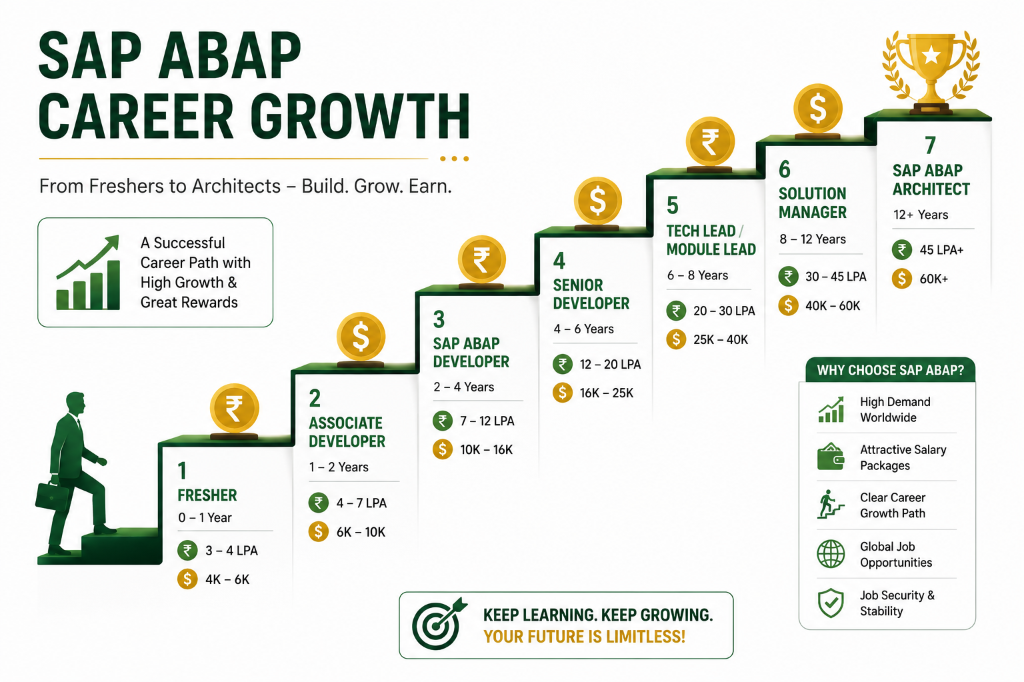 Figure 7: Growth progression for BTP developers building Joule custom skill interfaces.
Companies want to extend Joule for their specific use cases — custom skill plugins, industry-specific knowledge bases, custom action handlers. SAP provides the Joule Extension Framework on BTP for exactly this.
Developers who understand how to build Joule extensions — combining BTP development skills with AI integration knowledge — are entering a space that barely existed two years ago and is growing fast.
This is the same pattern we saw with mobile development in 2010, cloud development in 2015, and Fiori development in 2018. Early movers in new SAP technology consistently commanded premium positioning. Joule extension development is that opportunity right now.
How to Stay Ahead — What to Learn Right Now
If you’re an SAP professional wanting to stay relevant as Joule and SAP Business AI evolve — here’s a practical learning path:
- Understand what Joule can do in your area. If you’re a SuccessFactors consultant — know exactly which Joule scenarios are live, how to demo them, what configuration they need. Same for any SAP product area.
- Learn prompt engineering basics. Even as an end user, understanding how to phrase requests to AI systems effectively is a genuinely useful skill. Not deep AI knowledge — just practical prompting.
- Explore SAP Build Apps with AI features. SAP is embedding AI capabilities into their low-code tools. Build Apps now has AI-generated app features. Getting familiar with these puts you ahead of consultants who haven’t touched it.
- Follow SAP AI developments actively. SAP releases Joule updates frequently. Following SAP Community’s AI tag, SAP’s official What’s New notifications, and TechEd session recordings keeps you current.
- BTP skills remain foundational. Joule runs on BTP. Everything AI-related in SAP ecosystem connects through BTP services. Building BTP fluency makes all AI-related SAP work more accessible.
SAP Joule vs Microsoft Copilot — The Comparison Everyone Makes
Since Microsoft 365 Copilot exists and many companies use both Microsoft and SAP — this comparison comes up constantly.
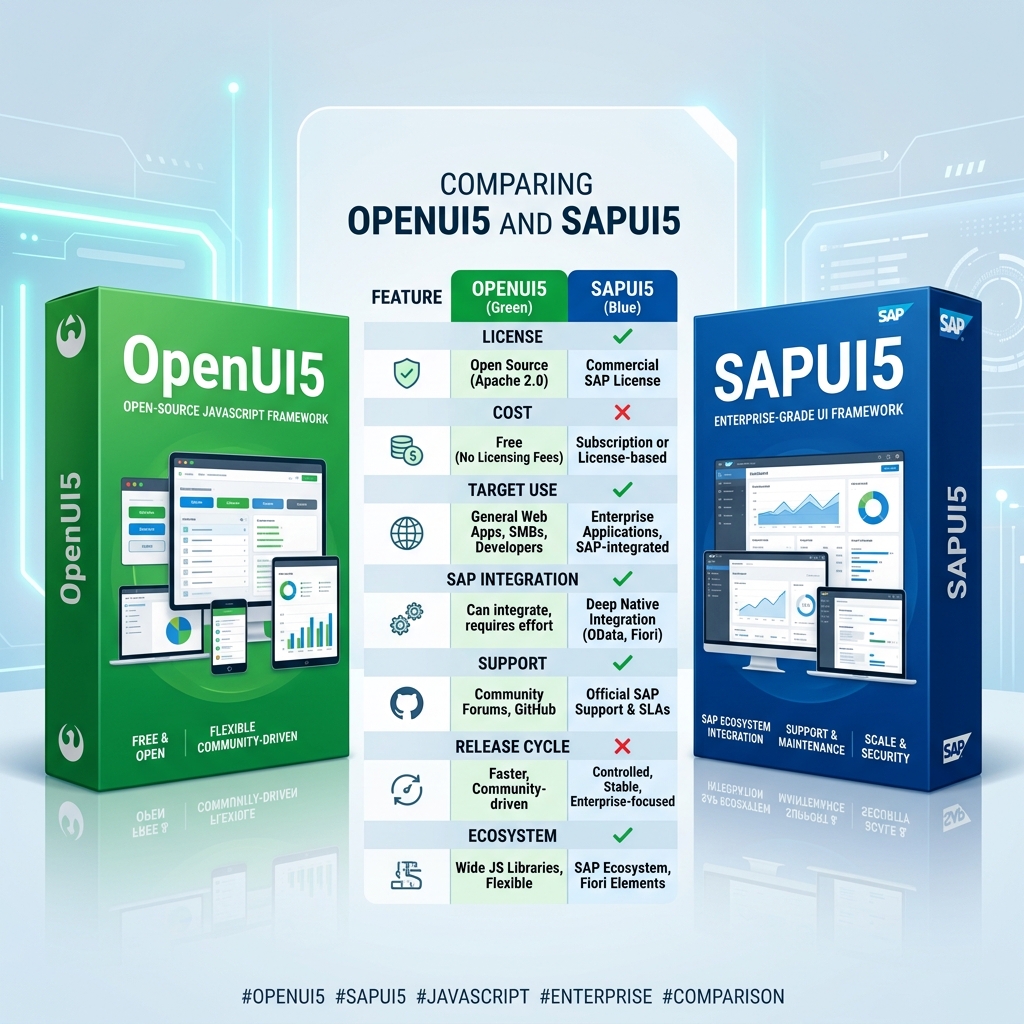 Figure 8: Contrasting corporate ERP workflows in Joule with general office documentation flows in Microsoft Copilot.
| Aspect | SAP Joule | Microsoft 365 Copilot |
|---|---|---|
| Strength | Deep SAP business process understanding | Office productivity, Teams, Word, Excel |
| Data Access | SAP transactional and master data | Microsoft 365 documents and emails |
| Authorization | SAP role-based access enforced | Microsoft 365 permissions |
| Primary Users | SAP system users | All office workers |
| Integration | Native SAP product embedding | Microsoft product embedding |
| Business AI | Supply chain, finance, HR, procurement | Document creation, meeting summaries |
They’re not really competing for the same job. Microsoft Copilot makes office work more productive. SAP Joule makes SAP business processes more accessible and intelligent.
The interesting space is where they overlap — SAP is building integrations between Joule and Microsoft Teams, so users can interact with SAP data through Teams conversations. That convergence will develop further through 2026 and beyond.
Real Scenario — One Day With Joule in 2026
Let me paint a picture of how a real workday changes with Joule embedded in SAP.
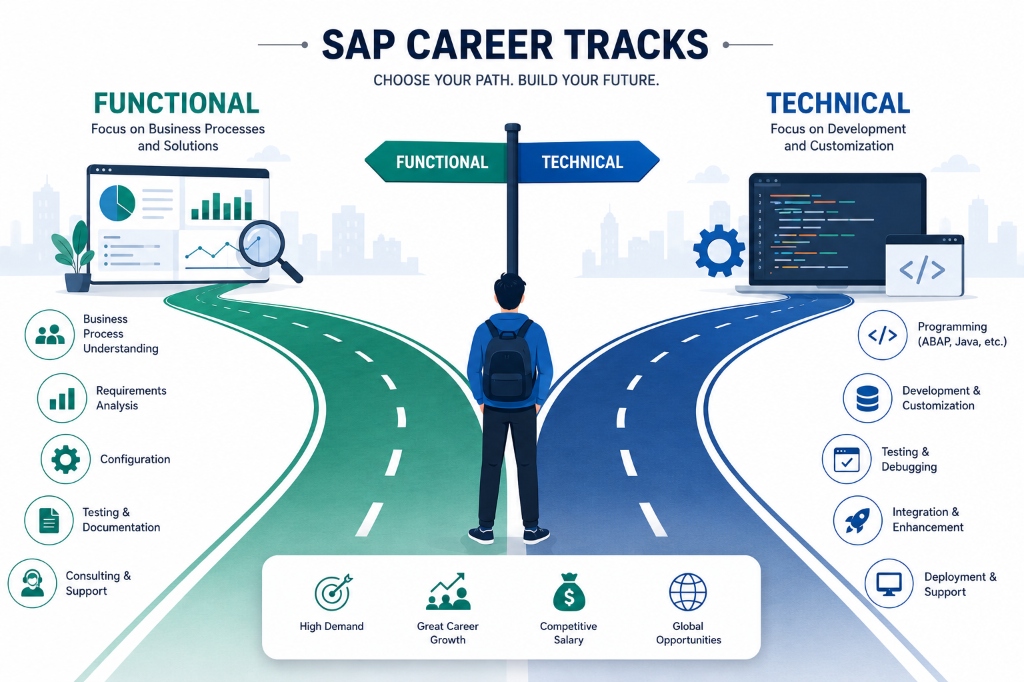 Figure 9: Typical hourly timeline representing user interactions with Joule.
- 8:30 AM — Finance Manager logs into S/4HANA Fiori
Joule proactively shows: “Good morning. 12 customer invoices are overdue by more than 30 days totaling ₹47 lakhs. 3 vendor invoices are awaiting your approval. Month-end close has 4 open items remaining.” No report needed. No navigation. Context delivered instantly. - 9:15 AM — HR Business Partner opens SuccessFactors
Asks Joule: “Which employees in the engineering department have not completed their mandatory compliance training this quarter?” Joule returns a list with employee names, managers, and training due dates — offers to send reminder emails automatically. - 11:00 AM — Procurement Manager in Ariba
Asks Joule: “Do any of our active supplier contracts expire in the next 60 days?” Joule surfaces 7 contracts with expiry dates, contract values, and renewal recommendation based on usage history. - 2:30 PM — ABAP Developer in BTP
Describes requirement to Joule: “I need a CDS view that joins Purchase Order header and item with vendor master, filtered by company code.” Joule generates the complete CDS view definition as starting point — developer reviews, modifies for specific requirements, activates. - 4:00 PM — New Employee in any SAP module
Asks Joule: “I need to create a purchase requisition but I’ve never done it before.” Joule walks through every step, opens the correct Fiori app, explains each field, flags mandatory inputs, and confirms when successfully submitted.
That’s not a futuristic scenario. Most of these capabilities are live today and improving every quarter.
Final Thoughts — Why Joule Matters More Than Most SAP News
SAP releases updates constantly. New features, new tools, new frameworks — it’s hard to know what actually matters versus what’s just noise.
Joule matters.
Not because it’s going to change SAP overnight or replace the expertise that experienced consultants have built. But because it represents a genuine shift in the human-SAP relationship — moving from “learn SAP’s language” to “SAP learns your language.”
That shift changes adoption curves, reduces training costs, opens SAP to users who were previously intimidated by it, and creates new technical work around AI extension and customization.
For SAP professionals in 2026 — ignoring Joule is the same as ignoring Fiori in 2016. Those who understood it early built differentiated positioning. Those who dismissed it as hype spent years catching up.
Stay curious. Keep learning. And next time you hear “SAP Joule” in a conversation — you’ll be the one explaining it to everyone else.
Keep building. Keep learning.
 Figure 10: Technical reviews showing Joule skill plugins to corporate deployment boards.
— Daksh
Self-Assessment Checkpoint
💡 **What LLM models power SAP Joule?**
Joule runs on a multi-model architecture. Rather than relying on a single model, it connects to multiple commercial hyperscaler models (like Azure OpenAI’s GPT models and Google Vertex AI’s Gemini/PaLM models) and leverages specialized SAP-specific models optimized for business task reasoning.
💡 **How does Joule remain accurate for company-specific data queries?**
Joule uses Retrieval-Augmented Generation (RAG) combined with the SAP Business Knowledge Graph. It queries S/4HANA or other backend systems in real-time to retrieve the user’s specific records, evaluates their semantic context using the knowledge graph, and formats the answer using the LLM.
💡 **Can external systems and custom apps access Joule?**
Yes, developers can use the Joule Extension Framework on SAP BTP to build custom skills, connect external APIs, map custom fields, or expose Joule functions to third-party tools like Microsoft Teams.

Written by Daksh Dedha
SAP Technical ConsultantDaksh is an SAP Technical Consultant specializing in ABAP programming, SAP S/4HANA migrations, Fiori development, and BTP cloud architecture. He authors free, hands-on tutorials to make enterprise SAP education accessible to all developers.
Test Your Knowledge
Loading question...
Quiz Completed
Related Tutorials
SAP BTP Event Mesh — Asynchronous Integration and Event-Driven Architecture Guide
Understand SAP BTP Event Mesh for event-driven architecture. Learn how queues, topics, webhooks, and asynchronous integration work between S/4HANA and cloud applications.
SAP BTPSAP Build Process Automation — Workflow, RPA, and Business Rules on BTP Guide
Master SAP Build Process Automation on SAP BTP. Learn how workflows, Robotic Process Automation (RPA), Business Rules, and low-code forms automate enterprise processes.
SAP BTPSAP BTP Free Tier Account — How to Get Started Without Spending Anything
Step by step guide to creating a SAP BTP free tier account in 2026. Set up your free BTP subaccount, enable services, and start building apps without a credit card.
Found this tutorial useful? Share it with your SAP development team.